Retelling UNIBEN’s artistic story…

While an undergraduate at the University of Nigeria, Nsukka, I spent ample time hanging around the Fine and Applied Arts Department. As a consequence, I made a number of friends from around there, who were handy in helping me make sense of some of the pieces in the gallery. In addition, I was privileged to have one of them as next door neighbour at my off-campus apartment; Ugochukwu, my namesake, not only helped me understand what artists actually do by letting me into every new piece on his Artist Diary, but went on to do incredible portraits of me without either pre-informing or asking me for a fee. Charles Ekeanyanwu has always been there to satisfy my hunger for the arts; he explains stuff to me like the great teacher he’s become. Yes, I loved arts, and I still love it. Dearly.

And so, it happened that I visited the University of Benin, UNIBEN, today. UNIBEN happens to have been established in 1970, one of the first generation of Nigerian universities; a university sited in Benin, a town reputed for breathtaking artistry. Of course, I remember that my high school history teacher taught us that the Ancient Benin Kingdom was art personified. In fact, for the Benin people art forms speak louder than a thousand words and a hundred pictures put together. For them, I suppose, art is life. Little wonder every nook and cranny of Benin City is dotted with life art forms – usually of royalty, which is the epicenter of the kingdom; the king here is deity.

Immediately on stepping into UNIBEN’s main gate, I noticed something spectacular. Though ancient in its outlook, it was fine arts galore! However, my sense of art appreciation failed me this once, as I couldn’t notice, talk less of making sense of, the story that was already being told in art forms right from the gate to the convocation arena. Coincidentally, today was convocation day at UNIBEN.

Then came Dubem to the rescue. How could I have come to Benin if not that I’ve either got stuff to tidy up here or know someone who lives here? In this case it was Dubem, a friend with a touch of difference, a friend like few others, and a friend indeed. We’re at UNN together. The long and short of it all is that Dubem, GCFR we call him, is now a masters degree student at the University of Benin. Dubem was my tour guide, so to speak. And then he called my attention to this…

www-corneliusndubuisi-com_uniben1

And then to this…

www-corneliusndubuisi-com_uniben2

And again to this…

www-corneliusndubuisi-com_uniben3

And yet again to this…

www-corneliusndubuisi-com_uniben4

There is yet another one…

www-corneliusndubuisi-com_uniben5

And then the very last one, the 6th one, right in front of the convocation arena…

www-corneliusndubuisi-com_uniben6

This is an interactive post; let us reason together. Kindly take a 2nd, 3rd, 4th, or even a 5th look at all six images and say what you observed or think on the comment box. What message do you think those 6 images lined up from the gate to the convocation arena is passing across? The most satisfactory answer gets a prize from Dubem; he’s the judge too. A book mailed to you. That’s the prize. And those who know Dubem will tell you his word is his bond.

When AGE leads YOUTH: 8 unwritten rules of engagement

No one tears off a piece of a new garment to make a patch for an old one. Not only will the new garment be ruined, but the old garment will look worse with a new patch on it! And no one puts new wine into old wineskins, for the new wine bursts the old skins, ruining the skins and spilling the wine. New wine must be put into new wineskins. But no one after drinking the old wine seems to want the fresh and the new. “The old ways are best,” they say.

Those are the words of our Blessed Lord, as recorded in the Gospel of St. Luke, chapter five, from verse thirty-six to verse thirty-nine. Little wonder, he is reckoned not just the greatest man, but the greatest teacher who ever lived – for his wisdom can never be measured. In those words are loaded nuggets of wisdom for leadership excellence, especially in cases where age plays leader to youth. No doubt, age comes with wisdom, wisdom garnered from myriads and varieties of experiences.

However, old people who are set over young people – in a leadership arrangement – must be especially careful. They must be careful because old patch on a new garment rarely looks good, plus new wine in old wineskins bursts! The reason is not far-fetched: generational gap. Generational gap captures the fact that successive generations differ considerably on many issues that matter, especially as it relates to value-orientation. An even bigger challenge is the ‘superiority complex’ that goes with age, as reflected in the rather mischievous claim of good old days. Since leadership is more influential than positional, the leader who is to wield ‘real’ and enormous influence over youths must keep to the following unwritten rules of engagement:

old-and-young-computer

  1. Give reasons; explain: They really don’t mind ‘what’ it is you want them to do, but they care about ‘why’ you want them to do it. It is typical of youths to want to know ‘why this’ and not ‘that,’ ‘why him’ and not ‘her,’ ‘why us’ and not ‘them,’ ‘why there’ and not ‘here.’ The point is that your directive is not enough; go on to explain why things should be the way you want them to be. Some older people think they don’t owe younger people explanations. Too bad. It used to be that way in the days of our fathers, but not now. Of course, they’d do it your way if you insist, but be sure they’re not comfortable with you.
  2. Know the trends – and showcase that knowledge: Youths are trend-freaks. You can be sure that something is trending for them at every point in time: fashion, music, hairdo, celebrity, gadget, slangs, and what have you. It will do you a lot of good if you’re in the know of the what’s ups in town. By knowing what’s trending, you create the impression that you’re on point and up-to-date. And there is just a way they reward you for this by being more open and friendly to you.
  3. Apologize. Thank. Appeal: Many people of the older generation rarely think they owe younger people an apology. They hesitate to say thank you because they feel they deserve things. They don’t get to beg because they have an entitlement mentality. There’s this annoying way they feel their successor-generation owe them the dues they paid their predecessor-generation. Who cares! If anyone does, that wouldn’t be the average member of the millennial generation. For God’s sake, apologize when you offend them; thank them when they do things for you; and appeal to them when you need them to do you a favour. Guess what? Your influence-rating will soar.
  4. Don’t threaten; speak to reason: Of course, they’d make tons of mistakes, usually because they’re distracted more often than not. When they do, and they always will, don’t be so red at them that you’re all threats. Guess what? Those threats mean little to them; they already know the most you can do and really don’t need you to remind them of that. Do they even care about what you’d do to them? They rarely do. Instead, conscientize them; speak to their sense of reason. You want them to feel real remorse for what they’ve done? The easiest way to get them to do that is to give them a reason to choose to do that. Remind them of how exceptional they’ve been and how what they’ve now done betrays their past and makes it all look like pretense. That would do.
  5. Don’t compare: You need to see some older people compare their own generation with that of the younger generation. They make it look like it used to be just like heaven on earth. To say the least, such comparisons are not only grossly uncalled for but annoying. Truth is: there was never a better generation and will never be; every generation only gets to respond to the changes that greet them while exploring their possibilities. Yes, gone are those days! Welcome to the now! And don’t even draw comparisons between people. That’s uncalled for, too. Individuals are both unique and differentially talented.
  6. Feign confused; ask for help: Youths lock up against the know-it-all kind of people. And many older people are especially good at priding themselves as capable of always answering every question, clearing every doubt, calming every fear, and solving every problem. How then will youths feel relevant? Why not give them opportunities to laugh at you by expressing ignorance over a seemingly easy question? Why not ask for help, which gives the impression that you too can be helpless. This is what will happen when you do so ones in a while: they’ll see you as really human, as one of them, and they’ll always flock around you.
  7. Sow respect; reap respect: With the millennium generation you earn respect; they don’t owe you it. And the only one way to reap a harvest of respect with them is to sow it. Respect them a lot, and they’d respect you a lot, too. How, you may be asking. Very little things signal respect: offer them a sit as soon as they step into your office or house, speak gently and kindly with them, keep your promises to them, temper justice with mercy, correct them with regard for their esteem, greet them – even if they didn’t greet you first, etc. Simple enough: you reap the respect you sow.
  8. Key into the digital: Be the leader who can be followed on twitter, befriended on Facebook, connected with on LinkedIn, chatted with on Whatsapp, and read up on a blog. Send materials to their mailboxes, ask them to download this or that app. In all, key into the digital revolution and ride with the flow along with them. And you’d be glad you did, since you’d always be on the same page with them.


At Anty Dayo’s feet… 12 game-changer take-homes

ddayo

The date was October 15, 2016 – exactly 48 hours from Anty Dayo’s 51st birthday. The venue was Bolingo Hotel and Towers, Central Business District, Abuja. The event was the 3rd Motivators International Youth Organization Annual Conference. And I was there. Live! Who is Anty Dayo? comes up next. For now, glean the following 12 lessons from her profound wisdom …

  1. Beautiful = Be-you-to-the-full

A second look at the word beautiful reveals that it is actually be-you-to-the-full. This revelation is striking, especially in a world where people seek beauty in cosmetics and cosmetic surgery. The best that can be got from beauty products and care is ‘agreeable or pleasant looks.’ But beauty calls for more. It demands that you be original and authentic. It insists that you explore your potentials to the fullest. It requests that you devote your time and energy to the mastery of your craft and the perfection of your art. The beautiful one is the genuinely attractive one.

  1. Create a legacy

Since we’re sojourners here on earth, the best we can do for ourselves, the human community and Mother Earth, is to leave a legacy – footprints on the sands of time. With this, generations yet unborn will know we were here once upon a time. However, legacy is not a chance occurrence; it is created. How? Simple: give yourself to every single thing you do.

  1. Make it singular, make it distinctive

Since Jack of all trades is usually a master of none, make it singular; choose one thing. Just one! And then deplore all your talents, creativity, uniqueness, originality, and authenticity into it. That is, make it distinctive. Make yourself into your own brand. It may not be better than the rest, but it will be astonishingly and breathtakingly different from the rest. Leave a signature of excellence in whatever you do. This is a duty you especially owe yourself.

  1. Celebrate your teachers

The human mind at birth, contends John Locke, is a tabula rasa upon which nothing is written. Then, whence comes all our knowledge? Our teachers! Beginning from the informal to the formal teachers, we owe all else to them. And so we must celebrate them. Always. This is right and just, especially those teachers who singled us out and pushed us into the incredible people we’re today.

  1. Excellence is not there; it’s in you

Schooling abroad is good, but that’s not where excellence is resident. Excellence lives in you – and in all of us. There are people who entirely schooled here [Nigeria] and turned out into some of the bests the world over. How did that happen? They took it upon themselves to become global citizens; they resolved to leave a dent on the planet.

use-for-dayo

  1. If you believe it enough…

The measure of believe is important. You have to believe it enough to achieve it – whatever! In medicine, only the prescribed dosage will effect the needed cure. While overdose may send one to the grave, ‘underdose’ will not get the job done. In the same way, believe has to be ‘enough’ – not less than that. Wondering if there is ‘over-believe’? Of course. We call them fanatics. The point is: if you believe it enough, you can have it more than enough.

  1. The greatest tragedy of any opportunity is that you missed it

So, prepare. Someone said it best, “I will prepare and wait, my time will come.” Adequate preparation and proper positioning will ensure that you embrace every opportunity that comes to town. Opportunity, they say, comes but ones. This is hardly true. But the greatest tragedy of any opportunity, which should give you cause for concern, is that you missed it.

  1. Never sit on the sideline

Never be undecided. Never sit on the fence. Don’t drown your inner voice; speak out. Don’t submerge yourself in the crowd. Don’t align with the backbenchers. Always dare to stand up to stand out. Take a position and stand by it.

  1. A good name is better than all else

The Bible particularly says that it (good name) is better than silver and gold, and to be desired than riches. In a materialistic and consumerist society such as ours, many people have traded their good names for fat bank accounts, and will do it over and again if given a second chance. This must not apply to you. The very first legacy everyone gets to leave is their name. Ask yourself: What readily comes to mind at the mention of my name – good person or bad person? If bad person, then today is a good day to start redeeming that name.

  1. Not demons, but decisions

The eventual outcome of our life is the sum total of the decisions we’ve made. Ours is a society where the devil takes all the blame and absolves the actor of all responsibilities. You must take exception to that. Truth be told, quality decisions make for a quality life. Why not take your time to ensure that you make sound judgments and decide correctly. And if your decision backfires, keep the accusing finger at the face in the mirror and not the devil and his demons.

  1. Obliterate every negative trait

Give it a chance and it will gun for chances; leave it a foothold and it will assume a stronghold. And that’s how it works! The way out is this: obliterate every negative trait. Crush every bad habit to the finish. Better still, nip it in the bud.

  1. Get yourself a coach

The farthest you can go alone is ‘far.’ Alone you can’t go ‘very far.’ If you aspire to go very far, then a coach has got to step in, to especially help you refine your content and get you set for world class exploit. Remember that world best athletes and Olympic champions still use the services of coaches. If they do, what makes you think you don’t?

motivators.png

5 qualities of game-changing leaders

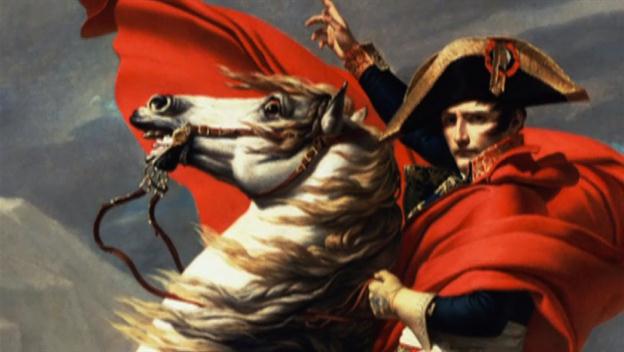
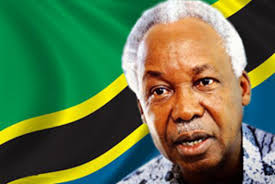
Truth be told, there are many shades of leaders in circulation, with the majority of their number coming from the quarters of those who merely occupy positions of authority and those who circumstantially wield enormous influence. But there is a small category of leaders who are characteristically game-changers; they are markedly different – and few. They orchestrate change. They question convention. They’re capacity and consensus builders. They expand the boundaries of human possibilities. They command fanatical followership. In one word, they exercise effective leadership. Names like American Abraham Lincoln, English Winston Churchill, French Napoleon Bonaparte, Grecian Alexander the Great, South African Nelson Mandela, and Tanzanian Julius Nyerere belong here. These names, to say the least, have become synonymous with game-changing leadership; quintessence and paragons of it per se.

For Aristotle, characteristic excellence is what makes a thing what it is. And so, distilled from the lives of the hitherto identified game-changing leaders, the virtues that add up to game-changing leadership include: vision, knowledge, courage, integrity, and communication. There surely is more to game-changing leadership than these, but those five stands tall.

VISION

Scriptures say it best, “Where there is no vision the people perish” (cf. Prov. 29:18). It can never be overemphasized that vision is critical to the leadership enterprise; the leader not only has to necessarily see tomorrow, but also see what tomorrow will bring to the table. Importantly, it has to be substantially clear to the leader where the ‘leader-ship’ is headed. Of course, no one expects them to be Merlin, no one expects them to pierce through the heavens to go read the palms of God, but everyone expects them to, at least, be in the know of the next few courses of action, and to be able to bet on the expected outcomes. The game-changing leader must be a wizard of some sort.

Lincoln’s example fits in here. Lincoln kept at the American Civil War and didn’t give up at any one point because the outcome was very clear to him; the American Union was so clear to him that the heads of more than 600,000 that rolled from both sides of the divide (Union and Confederate) were ‘worth’ it. And, in recognition of this quintessential visionary, the American people vote Lincoln the all-time best American citizen and leader.

lincoln

KNOWLEDGE

Hosea 4:6 always comes in handy in every discourse on knowledge, “My people perish for lack of knowledge.” The place of knowledge on the scheme of things is central for two reasons: humans are born with no knowledge of the world, and humans cannot function without knowledge of the world. Moreover, the demand of knowledge on the leader is enormous. The leader, though not all-knowing, must know enough. They must be generally knowledgeable, as to know something about everything; they must be especially knowledgeable, so as to know everything about leadership. To know enough to in order beat the demand of knowledge on leadership, the leader must both be well and widely read. The leader must always be in the robe of learning and ensure that no experience (theirs or others’) that holds a relevant lesson is allowed to breeze by. Game-changing leaders must be humble enough to learn from their followers and ‘inferiors.’

An ad rem example for the place of knowledge on the scheme of leadership things is erstwhile British Prime Minister, Winston Churchill. In the heat of World War II, and devastated by the untold terror Hitler was already unleashing on London, Churchill knew that only knowledge could come to his rescue; Hitler had already beaten him to toughness. What he did will shock you: he went all out to pull down Enigma, Hitler’s ‘all-mighty’ crypto coder. And how he did it is genius: he assembled a team of brilliant Britons to crack the code. The team came up with Ultra, one that made history of Enigma and WWII. With Ultra, Churchill knew every Hitler’s move ahead of time–and foiled them.

churchill

COURAGE

As a word, courage is only the containment of fear and never the absence of it. To be frank, fearlessness is an impossible height to attain; we all fear one thing or the other, at least once upon a time. Come to think of it, why would God request that we fear not as many as 360 times in the Bible if not that he knows of what we’re made; he remembers that we’re all fears. But the truth remains that fear gets in the way of great accomplishments. It particularly stifles creativity. Importantly, we owe our pathological resistance to change to the fear-factor; fear fastens us to our comfort zone and furnishes us with a thousand and one reasons not to set out on any improbable journey. One can already see that game-changing leaders can’t afford to have fear dominate them, since it promises to sink their ‘leader-ship.’ Else, how will they make change happen, how will they blaze new trails, how will they create things, how will they have their people do great work? How? Courage becomes the only option available to the leader. Courage comes in handy to swallow fear, to move one to ‘act’ in spite of fear. Truth be told, without courage there is no true leadership, as the cowardly leadership is nothing but yet another follower of fear.

French Napoleon Bonaparte and Grecian Alexander the Great stand out as ridiculously courageous leaders. Napoleon used courage to birth a new French republic after the revolution, and Alexander used it to conquer the known world of his time.

napoleon

INTEGRITY

At every point, there are two types of leaders: those merely being followed and those worth following. Mind you, every ‘followership’ is a choice. Yes, every follower gets to make the choice of being led. And this choice can be informed by convenience or duty; by convenience when ‘just following’ isn’t that bad, and by duty when one just can’t resist the attraction towards an exceptional leader. To hit the nail on the head, integrity is the singular factor that makes for exceptional leadership, the type wielded by game-changers. Integrity demands that leaders walk their talk, that they lead by example, that they themselves be committed to the common course by folding their sleeves and joining to soil their hands with the ‘dirty job.’ Leaders who say what they mean and mean what they say, and go on to keep their word are those worth following. Also integral to integrity is toeing the path of right, especially when it is the hardest thing to do. The leader who’s got character is worth following every other time.

Tanzanian Julius Nyerere stands out here. His exemplary leadership was legendary, so much that, being Catholic, a cause for his canonization is on. Indeed, he walked every bit of his talk.

julius

COMMUNICATION

Idle talk is cheap. Anyone can afford to say anything and walk away with it. Freedom of speech we call it. Not so for the leader. The leader must be master-communicator. Game-changing leaders harness the power of words and the magic of well-crafted expressions to ‘stir men’s blood.’ Somehow, the great speeches we celebrate have come down to use from the game-changing leaders we know. Think of the Gettysburg Address, in which the legendary definition of democracy was rendered, we recall the great Abraham Lincoln. Think of We Shall Fight on Beaches, a speech that reshaped World War II for the English people, we remember Winston Churchill. Think of the Infamy Speech, a seven-minute-long speech that moved the US Congress to declare full scale war on the Empire of Japan within an hour, we call to mind Franklin Roosevelt. How did Adolf Hitler push the Germans to declare war on the whole world? He simply spoke. How did Nelson Mandela contain the Apartheid situation after his release from prison? He simply spoke. To wrap it all up, game-changing leaders get tons done by speaking, speaking simply but uncommonly.

mandela

Dear finalist, “The Finals are never final”

Runners

Test us with tests but the finals are never final, because they fail to prepare us for the real test, which is survival.

~ Suli Breaks

Tonight, I’ll be privileged to be speaking to the Final Year Forum of St. Peter’s Chaplaincy, University of Nigeria, Nsukka. It promises to be an interesting outing. I’ll be sharing with them 10 tips to finishing strong, given that the finals are never final.

I wish to spread the pie by making my presentation downloadable here to the rest of the world. And I believe you’re going to find it interesting; feel free to share with family and friends to whom the message may concern.

Again, click here to download.

finish-strong