Unconventional Ways to Stay Sane in a Toxic and Addictive Social Media World

Everyone already knows the standard advice: “limit your screen time,” “turn off notifications,” “unfollow negative people,” “take a break.” These are all lovely suggestions, but hardly transformative.

Social media is engineered to override such well-intentioned boundaries. Limit your screen time? What if you work as a social media manager? Turn off notifications? And if those notifications are part of your job? Unfollow negative people? Most times, you don’t even have to follow them for their vileness to spill over. Take a break? And if it’s your source of income? Then what? So, if the usual advice isn’t cutting it anymore, what is one supposed to do? How do we survive it and maintain our sanity? The answer lies in embracing a thinking pattern that is unconventional.

Here are some unusual, strategies for staying sane in a digital ecosystem that profits from your insanity.

1. Don’t Detox; De-personalise

The usual recommendation is to “step away for a week.” But detoxing only resets the hunger cycle. Because in that one week, so much would have happened, and with the evidence of FOMO reminding us that we left things behind, we find ourselves playing catch-up, which in turn leads to some serious binging.

Try this instead:

Stop treating your feed as a mirror. Treat it as a billboard. A mirror may reflect you, but a billboard doesn’t define you. The less personal meaning you attach to what you see, the less power it has over your emotions. When you stop interpreting every post as commentary on your life, your brain stops reacting as though social media were a battlefield.

2. Mute 90% of People You Actually Like

This sounds outrageous, but stay with me. The problem is not only toxic content but also excessive content. Even good content can be overwhelming. Mute people you genuinely care about but don’t need to keep up with daily. You will still check up on them from time to time, but at least it’ll be on your terms. This transforms your feed from “the whole world shouting at once” into something closer to a curated library. Peace returns instantly.

3. Create a “Boredom Folder” on Your Phone

Put all your social media apps inside a folder named BORING or ROAD TO POVERTY or TIME WASTER, anything that triggers your higher self. It works because identity beats discipline. Imagine wanting to doomscroll and you’re staring at the folder you called Road to Poverty. Would you not immediately snap out of that desire and find something better to do? 

4. Ruin Your Algorithm on Purpose

Your algorithm is essentially a mirror of your impulses. To weaken its grip:

  • Click random things you don’t care about.
  • Search for medieval pottery.
  • Like a video on mushroom farming.
  • Spend 20 minutes looking up cloud formations.

Your feed will become so confused that it stops controlling you. A chaotic algorithm is a safer algorithm.

5. Designate Areas For Your Apps

Don’t use social apps everywhere; choose one specific spot: a chair, a corner, or even the edge of your bed. You can take it a step further by designating apps in different corners. When you’re cooking, Spotify. When working, LinkedIn. In need of ideas, Pinterest by the window.

What if I have a small apartment? 

Work with your furniture then. When on the bed, decide that Instagram is a no and must be used by the door. By the time you’re settled for the night and realise you need to adjust towards the door to use IG, you’ll forgo the inconvenience and go to bed. This technique is strange but remarkably effective. Limit the territory, and you calm the craving.

6. The “Two-Minute Pride Rule”

Before you post anything, ask yourself: “Will I be proud of this in two minutes?” Not in two years. Two minutes. Posts made from impulse, be it a spike of anger, insecurity, envy, or validation-hunting, lose their power when subjected to this tiny delay. The question creates a psychological breath that many social media apps are designed to steal from you.

7. Follow Your Future Self, Not Your Current Mood

Your mood will always gravitate towards distraction. But your future self, that wiser, calmer version of you, has better taste. Before following a page or creator, ask: Would the person I’m trying to become find this useful? This mental shift filters your digital diet and makes your online environment a partner to your growth, not a parasite on your attention.

8. Treat Your Attention like Money (Because It Is)

Before scrolling, ask yourself: Would I pay £10 to see what I’m about to see? If the answer is no, why offer something more valuable than money, your focus? If you were charged £10 for every content you like, share or comment, would the final grand total make you say, Yes, money well spent, or would you cringe at your outcome? This mindset re-prices your time and shatters the illusion that social media is “free.”

9. Stop Trying to Stay Updated and Start Staying Aligned

People scroll endlessly seeking updates: on trends, on news, on other people’s lives, on gossip, on opinions. But staying “updated” is an impossible, draining task. Staying aligned? With your values, goals, identity, and purpose, now that’s worth your time. This is a better way to refocus your mindset. It’s not updates you need, it’s value alignment on that course you want to take, that tutorial that will make your art better, that recommendation for the next book to read, that review for a movie that will expand your reasoning and vocabulary. Every time you open an app, ask: Is this aligning me or fragmenting me?

10. Curate Your Digital Silence

Silence is not the absence of noise but the presence of meaning.

Schedule deliberate “silence pockets” during your day. Five minutes where you do nothing: no scrolling, no music, no notifications. You can find these five minutes when commuting or bathing, or immediately ou come back from work. Let your brain rest and catch a break. This will help your perspective to be clear, and your social media cravings will reduce without force.

Finally,

Sanity in today’s internet is not maintained through rigidity or retreat. It is maintained through intelligent resistance. Through thinking that refuses to be predictable, trainable, or programmable. You don’t beat the system by escaping it; you beat it by refusing to let it shape the inner architecture of your life. And the moment you start using the internet consciously rather than emotionally, you become the rarest thing online today: A sane person.

What We Lose When Tech Makes Life Easier

Technology promised to make life simpler. And it has.

Tasks that once took hours now take seconds.

A message crosses continents instantly.

Groceries appear at our doors.

Work that required entire departments can now be done by one person and a machine.

Yet as convenience becomes the new normal, it is worth asking: what have we traded for all this ease?

When everything works at the push of a button, effort starts to feel unnecessary. But effort used to shape how we understood value. You learned patience when you waited in line, skill when you solved a problem by hand, focus when you couldn’t rely on an app to think for you. Now, with most things automated, the connection between labour and reward grows thinner.

We get results without process, outcomes without the struggle that once gave them meaning.We have also lost a sense of attention. Technology keeps us moving, clicking, consuming. We no longer give full focus to one thing at a time, because something else is always a tap away. The constant flow of information promises stimulation but rarely delivers clarity. When every task is streamlined, thinking deeply starts to feel like an inconvenience.

There’s another cost: our tolerance for difficulty. Friction used to be part of living. You wrote things down to remember them. You learned directions by actually getting lost. These small moments built a kind of mental stamina. They forced the mind to engage, to store, to adapt. Today, memory sits in cloud storage. Maps do the navigating. Autocorrect finishes our sentences. The mind stays comfortable, but comfort has its own price: it dulls the edge of capability.

Technology’s biggest gift, convenience, might also be its biggest trap. The easier things become, the less we notice what we’re doing. You no longer need to think about the process, only the result. This breeds a passive way of living, one where curiosity fades and speed replaces reflection. We scroll, click, buy, and move on. The day fills up, but it rarely feels full.Of course, no one wants to go backward. No one wants to type on a typewriter or wash clothes by hand just to feel authentic.

Progress isn’t the problem. The problem is forgetting that ease and meaning are not the same thing. When every inconvenience disappears, so does the chance to discover what we’re capable of.

A tool is supposed to serve us, not replace the parts of us that make effort worthwhile: attention, creativity, resilience. The danger lies in outsourcing too much of what makes us human simply because it takes time. When technology does the thinking, deciding, and remembering for us, the self becomes smaller.

Maybe the question, then, isn’t whether technology makes life better. It’s whether it makes us better. Convenience without awareness only breeds dependence. The solution isn’t to abandon technology but to reintroduce a bit of friction, to occasionally choose the harder path, the slower method, the manual option.

What we lose when tech makes life easier isn’t something you can measure. It’s the satisfaction of mastery, the discipline that comes from patience, the sense of connection that grows through shared effort. The challenge now is to hold on to those things, even as the world keeps finding new ways to remove them.

How Jeff Bezos Turned Obsession into a Superpower

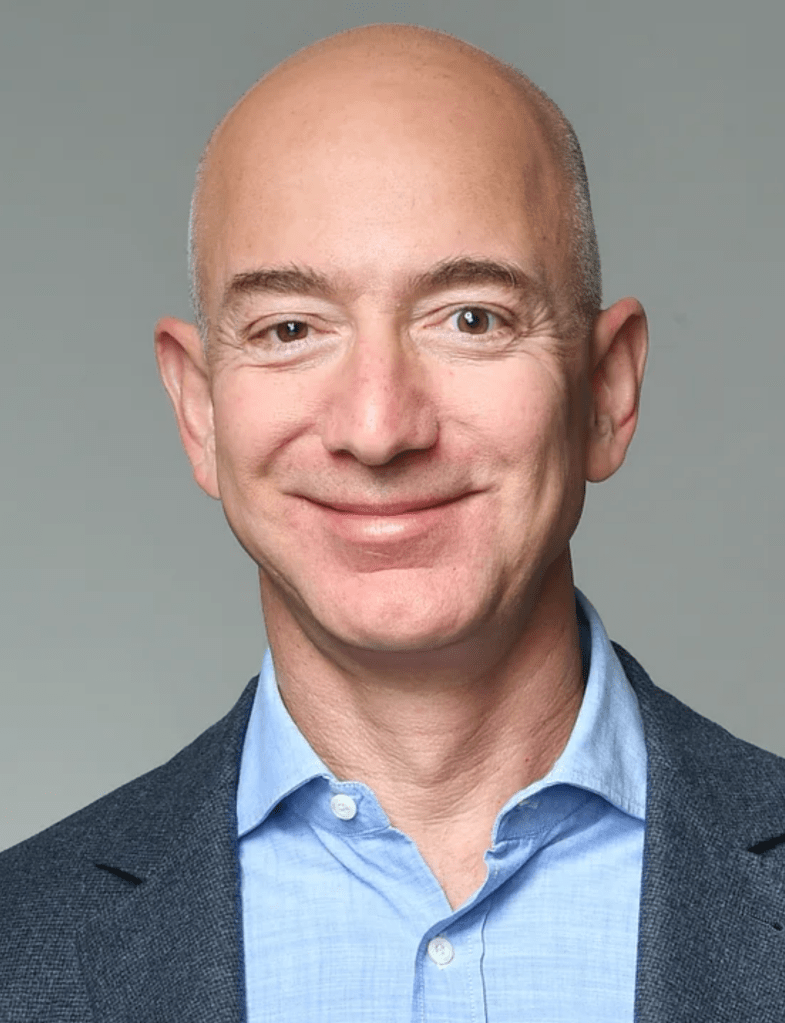
Jeff Bezos is precision wearing patience. He’s not the loudest man in the room, nor the most unpredictable. His power comes from something different, obsession so consistent it became a strategy.

Bezos built one of the world’s largest companies by caring about one thing with monk-like discipline: the customer. While others chased hype, he chased improvement. While others bragged about quarters, he built for decades. His superpower isn’t brilliance or charisma but the ability to stay fixated long after everyone else gets bored.

Here are five lessons from a man who turned obsession into an empire.

1. Be customer-obsessed, not competitor-driven

Most leaders watch the competition like hawks. Bezos ignored them. His eyes were always on the customer, their pain points, their frustrations, their expectations that no one else was noticing. Amazon didn’t invent e-commerce but perfected convenience. Same way it didn’t invent cloud computing, either, but still made it indispensable. Competitor obsession creates reaction. Customer obsession creates innovation. Bezos understood that while rivals fight over market share, the customer quietly decides who wins.

The lesson: The surest way to stay ahead is to stop racing others and start serving deeper. When you obsess over who you serve, competition becomes irrelevant.

2. Think in decades, act in days

Bezos popularised the “Day One” mindset, a warning against complacency. “It’s always Day One,” he said, meaning the hunger, urgency, and curiosity of a startup should never fade. He plans like a futurist, but executes like a founder racing a deadline. The patience to think in decades gives direction; the discipline to act in days gives momentum. He doesn’t confuse long-term vision with slowness. Amazon’s speed is legendary precisely because its goals stretch far beyond the quarter.

The lesson: Long-term thinking isn’t about waiting; it’s about staying committed longer than anyone else. The future rewards those who start early and keep going.

3. Boring consistency is a hidden weapon

Bezos once said, “We are willing to be misunderstood for long periods of time.” That’s the patience of a builder who values boring consistency over exciting detours. While competitors announce new ideas every few months, Amazon improves packaging, delivery times, and inventory systems. The world celebrates sparks of genius, but Bezos built bonfires of routine. His success didn’t come from big moves but from relentless micro-improvements that compounded over years.

The lesson: Greatness often looks repetitive. Mastery isn’t magic but the small things done relentlessly well until they look effortless.

4. Build systems, not just success stories

Amazon isn’t one business. It’s a machine that builds businesses: retail, logistics, cloud, entertainment, AI. That’s because Bezos built processes.He designed mechanisms, feedback loops, hiring principles, and decision frameworks, that ensured the company could grow without him being everywhere. Where others try to scale effort, he scaled efficiency. The result? A company that continues to evolve even when he steps back.The lesson: Don’t just build something that works. Build something that keeps working without you. Systems outlive ambition.

5. Let logic outlast emotion

Bezos once said he avoids decisions that rely on mood. He doesn’t chase applause or let outrage dictate direction. When Amazon is criticised, he doesn’t rush to defend; he listens, measures, and adapts. That emotional distance gives him control. It allows him to see clearly when others react impulsively. In an age of outrage and instant feedback, Bezos reminds us that logic compounds faster than emotion.

The lesson: Calm is a superpower. When everyone else is loud, the quiet thinker sees furthest.

Final thought

Jeff Bezos may not inspire memes or headlines the way Musk or Trump does, but his power lies in something rarer: disciplined obsession. He’s proof that the future doesn’t belong to the loudest, the boldest, or even the smartest. It belongs to those who can stay fixated on what matters long enough to make it inevitable.

5 Weird Lessons to Learn from Elon Musk

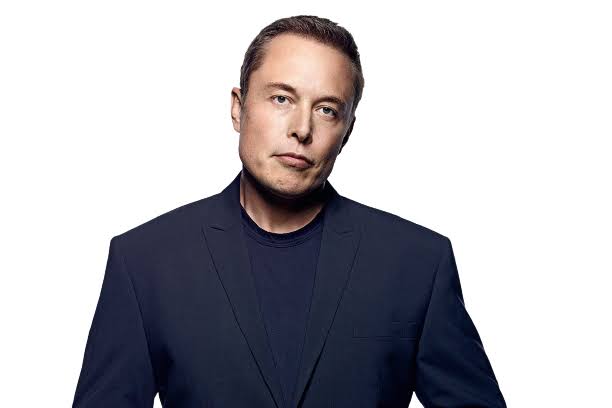
An image of Elon Musk

Love him or hate him, Elon Musk is one of the strangest teachers alive. His life looks like chaos wrapped in genius which is somehow also a daily reminder that brilliance and madness sometimes share the same office.

He is controversial. Yes.

His decisions are not always met with rousing applause, true.

Yet beneath his controversies are a few lessons most of us could use, even if we never plan to buy a rocket, or rename Twitter.

Here are five weird but worthwhile lessons to learn from him.

1. What’s the use of “f***-you money” if you can’t say “f*** you”?

The phrase “f***-you money” has floated around Wall Street for decades and it means the kind of wealth that frees you from having to please anyone. And Musk might be the first billionaire who actually lives by it. When advertisers pulled out of X (formerly Twitter) over his views, Musk in his usual manner snapped:

“If somebody’s going to try to blackmail me with advertising? Blackmail me with money? Go f*** yourself.”

Elon Musk, New York Times DealBook Summit 2023

He’s backed politicians like Donald Trump, then publicly clashed with them when he disagreed not because it’s strategic, but because he can.

The lesson: Leverage isn’t power until you use it. Whether it’s money, influence, skill, or freedom of time, the point of independence isn’t just to say you have it; it’s to live by it.

2. Stop staring at the scoreboard

Forbes keeps trying to rank the richest people on earth. Musk keeps pretending not to care. His net worth rises and falls by billions, yet he rarely comments on the list. When Tesla’s shares crashed, he told employees to hold tight and not panic because he was confident the value would climb again.

The lesson: Obsessing over metrics makes you a spectator of your own life. Success that depends on constant external validation: likes, rankings, and approval will always feel fragile. Do the work, believe in your trajectory, and let the scoreboard update itself.

3. Take universal problems personally

This might be Musk’s strangest strength. He comments on and adopts humanity’s challenges.

He worries that civilisation will collapse from low birth rates, so he’s fathered more children than most small towns.

He fears extinction on one planet, so he builds rockets to colonise another.

He’s even launched projects like xAI and Grokipedia to preserve and democratise human knowledge, hoping to someday store it beyond Earth.

The lesson: When you make a global problem personal, your motivation becomes unstoppable. Most people wait for institutions to fix things. Musk’s weirdness lies in asking, “Why not me?”

4. Use absurdity as a strategy

Space travel. Neural implants. Underground city tunnels. Colonising Mars. Electric trucks shaped like geometry homework. Half the time Musk sounds like a 12-year-old pitching sci-fi ideas until he actually builds them.

The lesson: Absurdity has power. Thinking beyond what’s “reasonable” is how boundaries move. Most innovation begins with a question that sounds ridiculous. If your dream doesn’t make someone laugh, it’s probably too small.

5. Fail loudly and keep building

Musk has missed deadlines, launched exploding rockets, and made promises that Twitter/X never fulfilled. But instead of hiding, he doubles down, learns in public, and builds again.

The lesson: Failure isn’t fatal, silence is. The people who grow fastest aren’t those who avoid mistakes but those who recover visibly. Progress requires public imperfection.

Final thought

You don’t have to agree with Elon Musk, most people don’t. But you can’t deny that he plays the game of life at full volume. His weirdness teaches a simple truth: freedom, focus, purpose, imagination, and resilience are messy in practice but priceless in effect.

So maybe the next time someone calls your dream “crazy,” take it as a compliment. You might just be on the Musk frequency.

Automation and Identity: Who Are We When Machines Do It Better?

Across the ocean, in Silicon Valley, a new model of an AI-driven programmer has been released. It can write, debug, and deploy code in less time than it takes a human to sip morning coffee. Meanwhile, a copywriter elsewhere just lost her job to a text generator, one that never gets tired, never calls in sick, never negotiates a raise.

Now, this is a big deal. Because for the first time, humanity is not only being replaced at the level of muscle, but at the level of mind.

Automation has been around since the first assembly line, but what we are witnessing now is cognitive displacement. Machines no longer just “do”; they “decide,” and that’s where the unease lies.

But here’s the question: who are we when machines do it better? What happens to the pride of craftsmanship, to the dignity of effort, to the very identity we’ve built around our usefulness? A generation ago, your worth was tied to your output. You could point to the thing you built, the words you wrote, the code you shipped. But what happens when someone, or something, can do it all faster, neater, cheaper?

The same technology taking jobs is also creating new ones, though fewer, and often more complex. The challenge is not that automation is ruthless but that it is efficient in a way that exposes how fragile our sense of self has become when detached from labour. The human identity has always leaned on work as its spine. Strip that away, and what remains?

Some argue that automation liberates us, that it frees humanity from drudgery so we can finally “be.” Others see it as the slow erasure of purpose, an unmaking of meaning through convenience. Both may be right.

Maybe this moment isn’t about losing identity but redefining it. Perhaps our worth shouldn’t hinge on productivity, but on perspective, our ability to imagine, empathize, and give meaning to the things machines only execute.Still, the irony is that even as we discuss automation, we do so using tools that are automating the very act of discussion.

The line is blurring. A robot writes poetry. A human edits it. Or maybe the other way around. Does it matter who did it better, or who did it first?Maybe the real question isn’t whether machines can do it better, but whether we can remain human enough to care. Because in the end, the soul of work has never been about output but about belonging. And that, for now at least, remains something no algorithm can replicate.