
How to Build an Inner Life in a Noisy World (For People Who Are Tired Of Living From The Outside In)

Source: Canva

We live in a world that demands noise from us.

Noise in the form of visibility, updates, opinions, busyness, speed, constant engagement, and an endless performance of “I’m doing fine.”

But somewhere between the noise and the expectations, many people have lost the most important space in their lives: the inside.

You can be talented, visible, or even celebrated, yet hollow inside.

You can be busy, productive, and hyper-connected, yet strangely disconnected from yourself.

The world trains us to build the outer life: the CV, the wardrobe, the profile, the visibility, the applause.

But nobody teaches us how to build the inner life, the quiet centre that gives everything else meaning, stability, and direction.

Aristotle would call it the contemplative life.

I simply call it the life that no one can take away from you.

If you’re tired of the constant pull and want something different, here’s how to build it in a noisy, distracted, hyper-stimulated world.

1. Start By Creating A “Quiet Corner” In Your Day

The human soul suffocates without silence. Not necessarily an hour, even ten intentional minutes can change your mental weather.

Sit. Breathe.

No phone.

No music.

No scrolling.

Just you, your thoughts, your God, your inner world.

At first it feels awkward.

Then it becomes peaceful.

Eventually, it becomes necessary.

2. Replace Reaction With Reflection

Most people live in reaction mode:

  • reacting to notifications
  • reacting to news
  • reacting to people’s comments
  • reacting to expectations

Reflection is when you pause long enough to ask:

“What do I really think about this?”

“Why did that hurt me?”

“What is my motive here?”

“Does this align with who I’m trying to become?”

Reflection creates clarity.

Clarity creates peace.

And peace is the fuel of inner strength.

3. Build A Private Relationship With Yourself

Many people know about themselves: their age, their skills, their personality type, but they have no relationship with themselves.

Ask yourself:

  • What do I value deeply?
  • What drains me?
  • What renews me?
  • What do I fear but never admit?
  • What do I want that scares me?
  • What does peace feel like in my body?

The inner life begins with honesty. And honesty begins with self-conversation.

4. Feed Your Mind Something Other Than Noise

Not everything you consume should be fast, loud, or shallow.

Feed your mind with:

  • books that stretch you
  • Scripture or spiritual texts
  • thoughtful podcasts
  • music that calms rather than stimulates
  • silence (yes, silence is food)

You cannot have a deep inner life on a diet of noise and distraction.

5. Develop Rituals, Not Just Habits

Habits are actions.

Rituals are meaningful actions.

Your morning routine can be a habit. But lighting a candle, saying a short prayer, journaling, or stepping outside to watch the sky? That’s a ritual.

Rituals anchor you. 

They slow the pace of a world that moves too fast.

They remind you that life is bigger than emails and deadlines.

6. Protect Your Emotional Boundaries

A noisy world wants access to you, to your attention, your time, your peace, and your energy.

Building an inner life means learning to say:

  • “I’m not available for that right now.”
  • “I won’t engage in that argument.”
  • “I don’t need to respond instantly.”
  • “My peace comes first.”

Boundaries are not walls.

They are filters.

They let in what nourishes you and keep out what destabilises you.

7. Nurture A Spiritual Life In Whatever Way Is Meaningful To You

Whether through prayer, meditation, Mass, Scripture, or  gratitude, a spiritual anchor creates depth.

Without a spiritual life, your inner world becomes a garden without water. A kind of good soil but no nourishment.

With a spiritual life, you develop resilience that is not dependent on circumstances.

8. Build A Small Circle That Speaks Truth Into Your Life

A rich inner life does not mean isolation. It means being intentional about the voices you allow near your heart.

Find people who:

  • challenge you without shaming you
  • correct you without crushing you
  • inspire growth without competition
  • love you without agenda

Inner strength grows best in the presence of healthy relationships.

9. Do Something Slowly And On Purpose

We are losing the ability to slow down.

Do one thing slowly every day:

  • wash dishes slowly
  • walk slowly
  • eat without a screen
  • read a physical book
  • breathe intentionally
  • sit outside and look at nothing

Slowness restores the parts of you that speed has been eroding.

10. Let Your Identity Flow From The Inside Out

This is the core of everything.

When your identity is rooted in:

  • titles
  • roles
  • likes
  • income
  • appearance and
  • achievements,

your peace becomes fragile.

When it is rooted in:

  • self-awareness
  • spiritual groundedness
  • inner clarity
  • values
  • purpose and
  • character,

your life becomes unshakeable.

Your outer world may change.

Your seasons may shift.

People’s opinions may rise and fall.

But your inner life, the space where your real self lives, will remain steady.

Final Thought

The world is noisy.

But you don’t have to be.

You can build a life so grounded, so centred, so inwardly rich that no external chaos can destabilise you. A life no one can give you and no one can take away.

And that, truly, is the beginning of freedom.
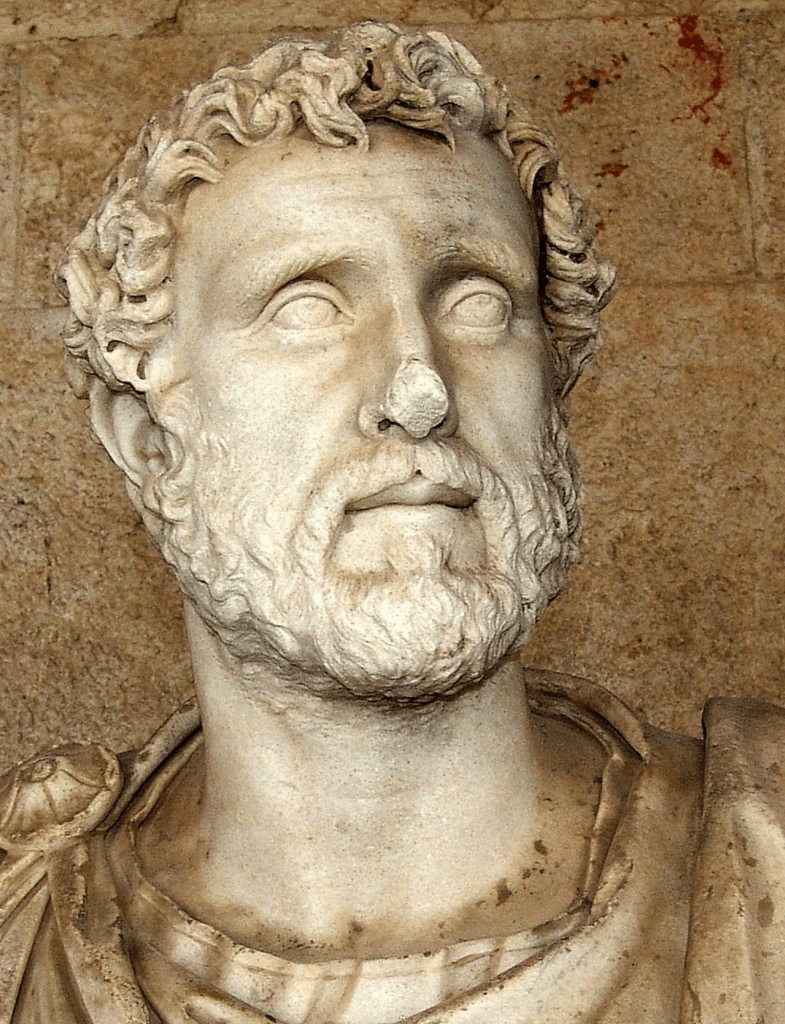
The Life That Can Be Taken Away: Rethinking Honour, Validation, and the Pursuit of a Meaningful Life

Source: Canva

Many years ago, when I first met Aristotle in a philosophy class, I didn’t fully appreciate how practical he was. But as life unfolds, his ancient wisdom begins to sound strangely modern, almost as if he had lived among us, scrolling through Instagram, attending performance reviews, and watching political drama unfold in real time.

Aristotle argued that human beings generally spend their lives pursuing one of three kinds of life: 

  • the life of pleasure
  • the life of honour
  • and the contemplative life. 

You might hear this and think, “Philosophy talk,” but if you look closely, you’ll recognise yourself somewhere in that list.

Today, let’s focus on the life of honour because this is the one most people unknowingly chase, and it’s also the one with the biggest built-in danger.

The Life That Depends on Other People

Aristotle said the life of honour is attractive because it feels noble. It is the life of achievement, recognition, influence, and status; what today we might call:

  • career success
  • awards and public praise
  • political visibility
  • professional reputation
  • social media validation

Nothing is wrong with these things. In fact, they are important. Society cannot function without people who lead, excel, and contribute.

But Aristotle pointed out one uncomfortable truth:

Honour is given by others. And whatever is given by others can be taken away by them.

That single insight explains much of the anxiety and performance pressure people live under today.

  • In the workplace, one manager’s opinion can make or break your appraisal.
  • Online, one viral moment can build your platform and one rumour can destroy it.
  • In politics, popularity is a wind that shifts without warning.
  • Even in families, approval can be inconsistent.

A life built on external validation will always feel unstable, because you’re essentially renting your happiness from other people.

And rent can go up.

Or expire.

Or be revoked without notice.

Why This Matters to Ordinary People Like Us

You don’t need to be a politician or a celebrity for this to apply. Think of the everyday situations:

1.Career

You pour yourself into your job, but a change in leadership suddenly reduces your visibility. Or a brilliant project goes unnoticed because someone else takes the credit.

2. Social Media

You start posting your work, expecting encouragement, but the likes don’t come. Or worse, they come and then suddenly they don’t. Your mood rises and falls with metrics you don’t control and your happiness is measured by an algorithm.

3. Family and Society

Some people live as though life is a never-ending audition for respect. They sacrifice peace trying to meet expectations that keep shifting.

In all these cases, you are essentially trusting other people to define your worth.

And people, wonderful as they may be, are unpredictable.

The Alternative: Building a Life That Cannot Be Taken Away

Aristotle believed the highest life is the contemplative life not in the sense of meditating on a mountain, but in the sense of living from the inside out rather than from the outside in.

In practical terms, this means:

Cultivating Inner Competence

Take pride in doing your work well, not because someone will clap, but because you value excellence.

Deepening Your Inner Life

This can mean prayer, reflection, journaling, reading, or simply creating space to think. People with a rich inner world are harder to destabilise.

Knowing Who You Are When No One Is Watching

If applause stopped today, would you still feel grounded? If a role, title, or platform disappeared, would your identity survive? Take time to answer these questions. You’ll be surprised by what you find out about yourself through the answers.

Your Worth Cannot Be Outsourced

The deeper point Aristotle makes is this:

A meaningful life must be rooted in something that cannot be revoked.

When your sense of worth is tied to external validation, your peace becomes fragile.

When it is grounded in personal values, inner clarity, spiritual depth, and sincere self-respect, your life becomes harder to shake.

Titles may change.

Followers may fluctuate.

People’s opinions may drift.

But what is built inside you remains yours.

And that, is the kind of life no one can take away.

Minding Your Business: The Forgotten Skill for Growth in a Nosy World

Somewhere along the road to hyper-connected living, we normalised a strange cultural habit of treating other people’s lives as public property. We zoom into their relationships, career choices, parenting styles, mistakes, joys, holidays, wardrobes, emotions, and even the tone of their captions.

In a world where everyone is watching everyone, minding your own business has quietly become a radical act, and paradoxically, one of the most powerful drivers of personal growth.

Most people think “mind your business” is about rudeness or indifference. Or that it means not calling out something wrong when you see it. It’s not. It is the posture that frees the mind from comparison, frees relationships from tension, and frees society from unnecessary friction. It is a discipline, a wisdom, a worldview, and quite honestly, a survival skill.

So, how do we mind our business the right way? Here’s how:

1. Assume You Don’t Know the Full Story Even When you’re Convinced you Do

Human beings see surfaces. We infer stories. We fill gaps with our anxieties, biases, and projections. The ability to pause and say, “I don’t know enough to have an opinion” is a hidden superpower. It immediately dissolves judgment, softens the ego, and restores compassion. Most conflicts, gossip cycles, and unnecessary emotional reactions come from the illusion of total knowledge. The truth is, many of us don’t want to miss out on dropping our “one cent”, so we fuel our replies and biases on the offhand, incomplete information we have and work with it. It’s even worse when such people still stand their ground after tangible information that disproves their take is released. You don’t know the full story.

2. Treat Other People’s Choices Like Locked Drawers

You wouldn’t walk into someone’s bedroom and start opening drawers, yet this is exactly what we do emotionally and mentally when we dissect people’s decisions. “But they brought their drawers to social media space. It’s not my fault if I look into it.” I hear you. They brought their matter forward, so you lose all sense of courtesy, right? When you see a choice you don’t understand, tell yourself: “This is a locked drawer. Not my property.” A couple announce they never want to have kids. That does not mean they hate kids, are child haters or bad people; they don’t want to have. It’s simple. You love kids, that’s fine. That drawer is not your property. You’ll be shocked by how much peace this unlocks.

3. Comparison is Emotional Theft; Stop Stealing From Yourself

Every moment spent analysing someone else’s path is a moment stolen from your own. You cannot grow and compare at the same time. Comparison is not admiration; it is distraction dressed in jealousy. It keeps you stuck in observation mode instead of creation mode. When your eyes are too busy on other people’s lives, your own life becomes blurry. The most successful, fulfilled people are not necessarily the smartest. They’re simply the most focused. They refuse to live life sideways. You can admire and not compare. You can infer and draw lessons without belittling your worth. They are them, and you are you. If there are decisions you have to make to adjust your life, make them, but do so with respect to your journey, not someone else’s.

4. Curate Ignorance Intentionally

The world tells you that you must be informed about everything. This is a lie. You need to be informed about what shapes your purpose, not what fuels your curiosity. Selective ignorance is a mental health strategy.

You don’t need to know who broke up with whom.

You don’t need to know what the neighbours bought.

You don’t need to know why someone quit their job or moved houses.

Curate ignorance like a minimalist curates furniture: keep only what adds value.

5. Celebrate People Without Studying Them

It is possible to admire someone’s success without performing a full autopsy on how they got there. You don’t need to decode their happiness, reverse-engineer their profits, or investigate their marriage. “Wow, they’ve only been active for three years and now have their own mansion.” “Can’t believe it’s digital products that gave him his wealth.” Why can’t you believe it, dearest inspector? Celebrate and move out of that space. Admiration becomes toxic only when it turns into analysis.

Try this: “I’m happy for them.” Full stop. No second sentence. No silent comparison. No psychological detective work.

6. If it Doesn’t Concern your Purpose, Goals, or Peace, it’s Noise

A simple filter to live by: “Does this information help me grow, help me love, or help me heal?” If the answer is no, it is noise, no matter how dramatic, juicy, or enticing. Confusing noise for relevance is one of the biggest growth-killers of our time. “But, I still need the information.” For what exactly? To gossip later on and distract yourself from your goals? Stay focused!

7. Your Attention is your Life, Protect it Like Property

Imagine your attention as a house. Every time you poke around other people’s business, you leave your own door wide open. You abandon your responsibilities, delay your dreams, weaken your confidence, and clutter your mind. Minding your business is ultimately about owning your mental estate. Personal growth accelerates when attention stops leaking.

8. Let Maturity Replace Curiosity

Curiosity is natural; maturity is chosen. Maturity tells you:

I don’t need to know everything.

I don’t need to verify rumours.

I don’t need to scrutinise strangers.

I don’t need to have opinions on lives I don’t live.

Freedom begins where unnecessary curiosity ends.9. Silence is sometimes the highest form of intelligence

In a loud world where everyone thinks their opinions are indispensable, silence is elegance. Choosing not to comment, especially when you can, is a sign of internal strength.

You don’t need to join every conversation or enter every digital argument. You don’t need to offer takes on issues that drain you.

You don’t need to drop hot takes on every subject matter. Sometimes the wisest thing you can say is nothing.

Minding your business is self-mastery.It is choosing depth over noise, focus over distraction, and growth over gossip.It is refusing to let your life become a spectator sport while you analyse everyone else’s highlight reel.In a world obsessed with watching, dissecting, criticising, and commenting, becoming a person who minds their business is transformational. It clears your mind, strengthens relationships, and makes coexistence not just possible, but beautiful.And best of all, it frees you to finally, fully, live your own life.

What We Lose When Tech Makes Life Easier

Technology promised to make life simpler. And it has.

Tasks that once took hours now take seconds.

A message crosses continents instantly.

Groceries appear at our doors.

Work that required entire departments can now be done by one person and a machine.

Yet as convenience becomes the new normal, it is worth asking: what have we traded for all this ease?

When everything works at the push of a button, effort starts to feel unnecessary. But effort used to shape how we understood value. You learned patience when you waited in line, skill when you solved a problem by hand, focus when you couldn’t rely on an app to think for you. Now, with most things automated, the connection between labour and reward grows thinner.

We get results without process, outcomes without the struggle that once gave them meaning.We have also lost a sense of attention. Technology keeps us moving, clicking, consuming. We no longer give full focus to one thing at a time, because something else is always a tap away. The constant flow of information promises stimulation but rarely delivers clarity. When every task is streamlined, thinking deeply starts to feel like an inconvenience.

There’s another cost: our tolerance for difficulty. Friction used to be part of living. You wrote things down to remember them. You learned directions by actually getting lost. These small moments built a kind of mental stamina. They forced the mind to engage, to store, to adapt. Today, memory sits in cloud storage. Maps do the navigating. Autocorrect finishes our sentences. The mind stays comfortable, but comfort has its own price: it dulls the edge of capability.

Technology’s biggest gift, convenience, might also be its biggest trap. The easier things become, the less we notice what we’re doing. You no longer need to think about the process, only the result. This breeds a passive way of living, one where curiosity fades and speed replaces reflection. We scroll, click, buy, and move on. The day fills up, but it rarely feels full.Of course, no one wants to go backward. No one wants to type on a typewriter or wash clothes by hand just to feel authentic.

Progress isn’t the problem. The problem is forgetting that ease and meaning are not the same thing. When every inconvenience disappears, so does the chance to discover what we’re capable of.

A tool is supposed to serve us, not replace the parts of us that make effort worthwhile: attention, creativity, resilience. The danger lies in outsourcing too much of what makes us human simply because it takes time. When technology does the thinking, deciding, and remembering for us, the self becomes smaller.

Maybe the question, then, isn’t whether technology makes life better. It’s whether it makes us better. Convenience without awareness only breeds dependence. The solution isn’t to abandon technology but to reintroduce a bit of friction, to occasionally choose the harder path, the slower method, the manual option.

What we lose when tech makes life easier isn’t something you can measure. It’s the satisfaction of mastery, the discipline that comes from patience, the sense of connection that grows through shared effort. The challenge now is to hold on to those things, even as the world keeps finding new ways to remove them.

5 Lessons “A House of Dynamite” Taught Me About Life, Leadership, and Fragility: A Movie Review

I recently finished watching A House of Dynamite (2025), Kathryn Bigelow’s new Netflix political–nuclear thriller starring Idris Elba, Rebecca Ferguson, and Jared Harris. Written by Noah Oppenheim, it’s a film that drops you right into the nerve centre of a world teetering on the edge.

A single, unidentified nuclear missile is detected, heading for the United States. What follows are 18 excruciating minutes replayed through the eyes of the military, the intelligence community, and the President himself.

The title, as Idris Elba’s President remarks in a line quoting the writer Norman Cousins, is “a reminder that we all live in a house of dynamite pretending the fuse isn’t lit.”

I said finished because the time I started watching it was different from when I actually finished it. I paused several times, not because the story was slow, but because my heart was pounding too fast. I even stepped outside at some point just to breathe. When I returned, the whole thing had gone from a regular movie-watching time to an experience that pressed down on my chest. And just when I feared the worst and hoped for the best at the same time, the film abruptly ended, leaving me to imagine the rest.

Trust me, the rest was unimaginable. Maybe that’s why the writers left it open-ended, because the only way to picture how it could end is if the real thing ever happened. And may it never.

A Lit Fuse

It’s a film about being caught off guard, about decades of preparation humbled by one unlucky miss, about systems that fail precisely when they’re needed most, and about the crippling paralysis that descends when too many decisions have to be made in too little time.

Picture this: in the Pentagon’s command post, alarms blare and screens flash red; in Fort Greely, Alaska, officers are frantically recalibrating interceptors; in the White House Situation Room, no one can confirm where the missile originated. And somewhere beneath all that chaos, Secretary of Defence Reid Baker, upon being evacuated, makes a brief, faltering call to his estranged daughter, a goodbye disguised as small talk, before walking out, removing his security tag, and leaping to his death. A silent protest against the unimaginable failure of a system built on the promise of control.

The world’s most powerful military was suddenly clueless, helpless, and frightened. The Ground-Based Midcourse Missiles failed to intercept. Communications collapsed. And for once, no one, not even the president, knew what to do.

Lessons from A House of Dynamite

1. Life happens behind the scenes, often beyond our awareness

As you go about your normal day, unseen forces are at work deciding the quality of your life, sometimes even whether you live or die. The ten million Chicagoans who would die upon impact never knew that in those seventeen minutes, their fate had already been sealed. We live each day unaware of how fragile everything is. In one of the film’s most moving moments, Secretary Baker calls his estranged daughter, just to hear her voice, but never manages to tell her what’s coming. And she, on the other hand, doesn’t realise that it is the last time they’ll speak. That’s how close and how distant life and death can be.

2. The weight of leadership is real

President Elba’s character once thought the nuclear football was purely symbolic, a deterrent, not a tool to be used. Until the day came when the impossible sat right in front of him. That’s what leadership often is: facing the nightmare you prayed would never arrive. Uneasy lies the head that wears the crown.

3. Crisis reveals what training conceals

Everyone in those command posts saw and heard things they had never faced before. The alert rising to DEFCON 1. The intercepts failing. Systems collapsing. Designated survivors being whisked away under uncertain orders. In moments like that, training turns to instinct and instinct turns to fear. The calmest people are often the ones who know there’s no playbook for what’s unfolding.

4. Fortune is rarely fair, and luck is never logical

When FEMA’s new deputy was evacuated as a designated survivor, someone muttered, “She’s barely been here a year.” But in that chaos, it wasn’t merit that mattered, but luck. Life is like that. The day that tests your fortune doesn’t ask how long you’ve been around; it simply asks whether your name was on the list.

5. We can’t be too prepared, but we can be grounded in hope

All the systems, budgets, and simulations failed. What remained was faith and the trembling belief that maybe, somehow, it wouldn’t all end in fire. Preparation can take us far,, but hope carries us the rest of the way. And maybe that’s the lesson the movie wanted to leave us with: that the world may be wired for destruction, but we’re wired for hope.

    Watch it and watch it again!

    A House of Dynamite serves as a mirror held up to a world that pretends to be safe because it’s uncomfortable to imagine otherwise. It’s unsettling, brilliant, and brutally honest. It’s the kind of film you don’t just watch but survive.

    So, if you’ve seen it, watch it again, this time, with intent. Watch for the silences between orders, the faces behind the screens, the fear behind the protocol. And if you haven’t, find it on Netflix, and prepare to be moved, disturbed, and awakened. Because, in truth, we all live in a house of dynamite.