5 Weird Lessons to Learn from Elon Musk

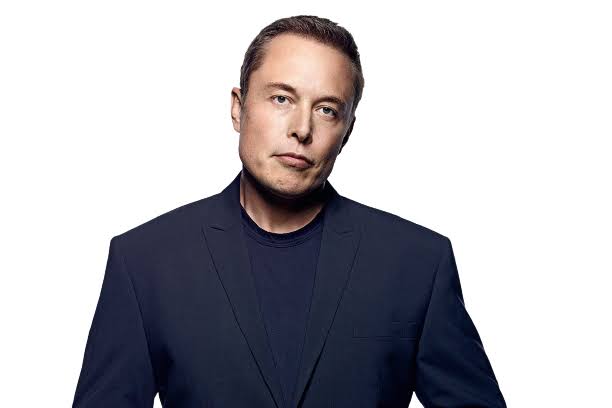
An image of Elon Musk

Love him or hate him, Elon Musk is one of the strangest teachers alive. His life looks like chaos wrapped in genius which is somehow also a daily reminder that brilliance and madness sometimes share the same office.

He is controversial. Yes.

His decisions are not always met with rousing applause, true.

Yet beneath his controversies are a few lessons most of us could use, even if we never plan to buy a rocket, or rename Twitter.

Here are five weird but worthwhile lessons to learn from him.

1. What’s the use of “f***-you money” if you can’t say “f*** you”?

The phrase “f***-you money” has floated around Wall Street for decades and it means the kind of wealth that frees you from having to please anyone. And Musk might be the first billionaire who actually lives by it. When advertisers pulled out of X (formerly Twitter) over his views, Musk in his usual manner snapped:

“If somebody’s going to try to blackmail me with advertising? Blackmail me with money? Go f*** yourself.”

Elon Musk, New York Times DealBook Summit 2023

He’s backed politicians like Donald Trump, then publicly clashed with them when he disagreed not because it’s strategic, but because he can.

The lesson: Leverage isn’t power until you use it. Whether it’s money, influence, skill, or freedom of time, the point of independence isn’t just to say you have it; it’s to live by it.

2. Stop staring at the scoreboard

Forbes keeps trying to rank the richest people on earth. Musk keeps pretending not to care. His net worth rises and falls by billions, yet he rarely comments on the list. When Tesla’s shares crashed, he told employees to hold tight and not panic because he was confident the value would climb again.

The lesson: Obsessing over metrics makes you a spectator of your own life. Success that depends on constant external validation: likes, rankings, and approval will always feel fragile. Do the work, believe in your trajectory, and let the scoreboard update itself.

3. Take universal problems personally

This might be Musk’s strangest strength. He comments on and adopts humanity’s challenges.

He worries that civilisation will collapse from low birth rates, so he’s fathered more children than most small towns.

He fears extinction on one planet, so he builds rockets to colonise another.

He’s even launched projects like xAI and Grokipedia to preserve and democratise human knowledge, hoping to someday store it beyond Earth.

The lesson: When you make a global problem personal, your motivation becomes unstoppable. Most people wait for institutions to fix things. Musk’s weirdness lies in asking, “Why not me?”

4. Use absurdity as a strategy

Space travel. Neural implants. Underground city tunnels. Colonising Mars. Electric trucks shaped like geometry homework. Half the time Musk sounds like a 12-year-old pitching sci-fi ideas until he actually builds them.

The lesson: Absurdity has power. Thinking beyond what’s “reasonable” is how boundaries move. Most innovation begins with a question that sounds ridiculous. If your dream doesn’t make someone laugh, it’s probably too small.

5. Fail loudly and keep building

Musk has missed deadlines, launched exploding rockets, and made promises that Twitter/X never fulfilled. But instead of hiding, he doubles down, learns in public, and builds again.

The lesson: Failure isn’t fatal, silence is. The people who grow fastest aren’t those who avoid mistakes but those who recover visibly. Progress requires public imperfection.

Final thought

You don’t have to agree with Elon Musk, most people don’t. But you can’t deny that he plays the game of life at full volume. His weirdness teaches a simple truth: freedom, focus, purpose, imagination, and resilience are messy in practice but priceless in effect.

So maybe the next time someone calls your dream “crazy,” take it as a compliment. You might just be on the Musk frequency.


Automation and Identity: Who Are We When Machines Do It Better?

Across the ocean, in Silicon Valley, a new model of an AI-driven programmer has been released. It can write, debug, and deploy code in less time than it takes a human to sip morning coffee. Meanwhile, a copywriter elsewhere just lost her job to a text generator, one that never gets tired, never calls in sick, never negotiates a raise.

Now, this is a big deal. Because for the first time, humanity is not only being replaced at the level of muscle, but at the level of mind.

Automation has been around since the first assembly line, but what we are witnessing now is cognitive displacement. Machines no longer just “do”; they “decide,” and that’s where the unease lies.

But here’s the question: who are we when machines do it better? What happens to the pride of craftsmanship, to the dignity of effort, to the very identity we’ve built around our usefulness? A generation ago, your worth was tied to your output. You could point to the thing you built, the words you wrote, the code you shipped. But what happens when someone, or something, can do it all faster, neater, cheaper?

The same technology taking jobs is also creating new ones, though fewer, and often more complex. The challenge is not that automation is ruthless but that it is efficient in a way that exposes how fragile our sense of self has become when detached from labour. The human identity has always leaned on work as its spine. Strip that away, and what remains?

Some argue that automation liberates us, that it frees humanity from drudgery so we can finally “be.” Others see it as the slow erasure of purpose, an unmaking of meaning through convenience. Both may be right.

Maybe this moment isn’t about losing identity but redefining it. Perhaps our worth shouldn’t hinge on productivity, but on perspective, our ability to imagine, empathize, and give meaning to the things machines only execute.Still, the irony is that even as we discuss automation, we do so using tools that are automating the very act of discussion.

The line is blurring. A robot writes poetry. A human edits it. Or maybe the other way around. Does it matter who did it better, or who did it first?Maybe the real question isn’t whether machines can do it better, but whether we can remain human enough to care. Because in the end, the soul of work has never been about output but about belonging. And that, for now at least, remains something no algorithm can replicate.

“IS EVENUS NOT A PHILOSOPHER?”

< are they thought leaders or thought frauds? >

As we navigate through the world of thought leadership, it is important to ask ourselves what we truly mean by the term “philosopher.” I mean, “thought leader” is only a sleek synonym of “philosopher.” Are those who claim to be thought leaders really seeking knowledge and wisdom, or are they merely seeking power and influence?

This question recalls the famous conversation between Socrates and his friends in Plato’s “Phaedo,” where the great philosopher challenged the claim of the Sophist Evenus to be a philosopher. Socrates argued that Evenus, like many so-called “thought leaders” today, was merely a rhetorician, someone who used language to persuade rather than to seek truth.

Socrates pointed out that true philosophers, like himself, seek knowledge and wisdom for their own sake, without any concern for personal gain or influence. They are committed to discovering the truth, even if it challenges their own beliefs or goes against popular opinion.

In contrast, rhetoricians are primarily concerned with winning arguments and gaining power. And by extension, selling out ineffectual courses, half-baked books, empty sessions, etc. They use language to manipulate others and achieve their own goal of cashing out, rather than seeking truth and wisdom and propagating same.

The term “thought leadership” is often used to describe those who claim to be experts in their field and offer insights and advice to others. However, we must be careful not to confuse true thought leadership with mere rhetoric.

True thought leaders are those who have a deep understanding of their subject matter and are committed to sharing their knowledge and insights with others. They are not concerned with winning arguments or gaining power, but with helping others to learn and grow.

In contrast, those who are merely using the term “thought leadership” as a way to promote themselves or their ideas without a commitment to seeking truth and wisdom are nothing more than frauds.

In the age of social media, it is all too easy to confuse popularity and influence with true thought leadership. We must be careful not to fall into this trap, and instead seek out those who are truly committed to seeking knowledge and wisdom for their own sake.

So the question remains, “Is Evenus not a philosopher?” Perhaps not, according to Socrates. And in the world of thought leadership, we must be just as discerning in our search for true wisdom and knowledge.

THE CORONATION, BIDEN & TRUMP

< what your enemies usually would do >

10:20am this morning, 6 May 2023, Their Majesties, King Charles III & Queen Camilla, will make their way in a royal procession through the streets of Central London to Westminster Abbey, where, at exactly the strike of 12, the crown of St Edward will be placed on King Charles’s head and proclaimed the “Undoubted King.” And it’s “God Save The King!” all across the United Kingdom and the Commonwealth and Realms of the British Empire!

Now, this is a big deal. The first of its kind in 70 years, since Charles’s mother Elizabeth in 1953 was crowned Queen, a reign that endured to its platinum jubilee. Of all the eligible dignitaries to grace the actual coronation event inside Westminster Abbey, only 2,000 seats are available.

You can trust the American president is (by virtue of the immensity of his power and his country’s long and deep alliance with the UK) entitled to more than one seat. At least for himself and a significant other.

But Joe Biden won’t be attending. And trust there’s no more important engagement anywhere in this world he’d rather be about. I mean, it doesn’t get more important anywhere in the world than being in London today. Trump even taunted Biden would probably be sleeping all day.

The thing is, Donald Trump has blasted Biden for not being in London today. He said it was an affront on the English monarchy. He queried that it would have taken nothing from a Biden who recently did a tour of Northern Ireland to show up to London for this all-important event.

Of course, the larger context for this fierce criticism, like many others before and after it, is the race for the White House. Just like your opponents and enemies who want what you have would do. It is pitching popular opinions against you, insinuating they’d have done better in your shoes.

Here’s what they’re cashing in on: people’s ignorance. And here’s what I mean. Trump would probably, and almost certainly, not have attended the coronation were he sitting president. He knows why Biden isn’t attending, but is weaponising the fact that most people don’t. I mean, over 80% of Americans alive (are less than 70 years old) haven’t witnessed an English coronation and wouldn’t know what an American president should do with a coronation IV.

There have been over 8 coronations since the founding of America in 1776 and no American president attended any. For the last one, that of Queen Elizabeth II in 1953, President Dwight D. Eisenhower was invited but skipped it, sending a delegation instead, like Biden has sent his wife Jill, accompanied by granddaughter Finnegan.

Come to think of it, it is ideologically nonsensical for the US President to ever attend. I mean, this is monarchy that democracy is everything against, and there will be the president of the free world seated in an audience where a king is being crowned. Makes any sense? In this particular coronation, the Archbishop of Canterbury will actually invite the audience, both in the Abbey and across the UK, to do homage to the new King. And Trump is asking Biden to be in that room. PR disaster! Like fire and brimstone was hauled at the Catholic JFK for kissing the Pope’s ring.

We can talk about how the coronation is now only a relic of a past, how the English monarchy is only a cultural heritage, and how it doesn’t really mean anything particularly powerful. But signs and symbols will always mean something. And the memories they venerate will always open old wounds.

While it is the winning strategy of your opponents to cash in on the ignorance of your audience, it is your responsibility to dispel the darkness of their ignorance by informing them accordingly. Don’t leave them in the dark, else they’d make recourse to whatever your enemies call light.

As a temporary resident of the United Kingdom, it is only fair that I join and chorus:

GOD SAVE THE KING!

THE FOURTH OF JULY

< a good day to declare mental independence >

I’m Americanophile. As in, I greatly admire the United States of America – and publicly so. By the way, I really like how they name things. Today, for instance, July 4, America’s Independence Day, is also officially called “The Fourth of July” or “July 4th.” Just like June 19, the yearly commemoration of the day in 1865 when the last batch of slaves in Texas received the news of the freedom Lincoln won them in the Civil War, is also just called “Juneteenth.”

So, on July 4, 1776, exactly 246 years, the then 13 colonies comprising the United States of America adopted the Declaration of Independence, the historic document drafted by Thomas Jefferson. Declaring independence from Great Britain was also a declaration of war against the most powerful force at the time, one that lasted until the Treaty of Paris of September 3, 1783. Do the math: 7 years!

Around here, Nigeria, we quite can’t relate to that sort of independence, as ours was handed us on October 1, 1960, as an act of Her Majesty’s magnanimity. While Balewa and Zik wined and dined with Princess Alexandra of Kent, Queen Elizabeth II’s first cousin who represented the British Crown, they probably were too carried away to realize that there’s always a string that continues to bind you with whoever served you freedom on a platter of gold. You never really break up with them.

The freedom to think for oneself, to give yourself a real chance at self-determination, almost never comes without a form of fight. And mental freedom is the priciest gift you can give yourself in a society and time where social media and some so-called thought leaders and blind religious guides are luring you to adopt patterns of thinking that only serve their ulterior motives.

In more ways than one, the American Revolution appears to be the best thing to have happened to the modern world, as it translated the human socio-political experience from the hitherto widespread monarchical system to the different expressions of democracy we now enjoy. I mean, immediately following was the French Revolution of 1789, only 6 years after Britain and America met in their capital, Paris, to finally agree to part ways.

While we join our American friends to celebrate their independence and the possibility of true self-governance it resounded across the globe, may we remember not to forget to grant ourselves mental independence, at the least.