The game of life and the game of snooker: similarities and lessons

image

image

The game of snooker is pretty much like cycling, where the knowledge settles in like forever. Even at that, I was shocked that I could still flow with the game, given that I last played it 10-12 years ago. Yes, I had a privileged childhood, one that saw me try my hands on many things, including soccer, tennis and trading.

The big deal about today’s snooker outing is that it made more sense to me than it did the last time I did. This time, as different from last time, the game reflected a picture of real life and became my teacher. I just could see next to everything that obtains in life depicted on the game.

And so, I wish to share on this platform some of those facts of life that echoes from the snooker game. To say the least, and in a sense, life is snooker.

1. The variety of balls on a green board: The very appearance of the game speaks volumes about life already. Variety is the spice of life we say; the variegated colours of the snooker balls re-echoes this. We say men are in sizes, and the differential values of the balls reflect this. Plus, we say the land is green, and the snooker board itself is a green one. And so, facing a snooker board is like facing life.

2. Everyone starts out equal: All men are created equal – though not really born equal, given the unfair advantage some enjoy from birth. For the game of snooker, both players start out equal; no one owns either of the “spot” or “strip” balls from the word go. Eventually, the first “potting” makes that decision; the first “potter” gets what he sent into the “pocket.”

3. Chance and choice play out on the board: Pretty much like life, we get both what we bargained for and what we didn’t bargain for. You want to pot your ball and you find that it was the other guy’s own that went in; you try to do this and the other undesirable thing got done. And truth is that more than once in a given game one would find the odds in one’s favour. Of course, it is more of choice: you want something, you go get it!

4. The rules reign supreme: Like life, it is a game of rules; many rules. And you’ve to abide by them or be punished. It is squarely a game of sowing and reaping; no excuses whatsoever! The punishments are straightforward, and may be as much as loss of the game itself. So, the player must behave him or herself and be very open to accepting those punishments.

5. Vision is everything: Vision means as much in snooker as it is in life. You just need to see well enough and calculate moves ahead. Without vision in life one perishes; without vision in snooker one loses. That’s just how it works.

6. Your word is your bond: There are a number of interesting ways of losing a snooker game. The most annoying one is the best teacher. After potting all of one’s balls, the decider of the game is the potting of the “black ball.” But it must be done one way: say the one of the six pockets you’re sending it to and ensure that’s the very pocket it gets into. To say the least, you’re bound by your words. Anything other than that means loss of the game – to your opponent. In snooker as in life, your word is your bond; when you say you will do something, do it!

7. External forces conspire for or against one’s favour: To start with, the balls are driven by the “cue.” You just get to wish the cue does your bidding or be sanctioned. You want it to pot a “strip” and it instead ends the game by potting the “black.” You want it to simply pot the black, and it pots it and goes in with it – loss of game! There is also the “cushion” that helps to bounce the ball around the field of play; it could make or mar your game. Mind you, it’s nothing personal as some days are just like that.

It made sense playing snooker again. I guess I should do it more often.

The story of Nigeria and the developed world, and why we’re 100 years behind them

NigeriaReport-400x400

Let me quickly talk about Dubai. 60 years ago, Dubai wasn’t on the map of the world as we have it today, nor was it anywhere close to the top of the global scheme of things. Dubai meant next to nothing to tourists, there was no business to attract investors, and the people were just there being busy subsisting on fishing (being a coastal area) and other activities befitting of rural dwellers and a grossly underdeveloped populace. And then she struck oil in 1966 – exactly 10 years after Nigeria’s 1956 discovery of large reservoir of the liquid black gold in Oloibiri, Bayelsa State – and got started on oil exploration. Now, this is what the Ruler of Dubai did differently. He inquired from experts how long Dubai’s oil boom was going to last, and they furnished him with the projections. And guess what he did? He decided to principally use the huge cash raining into state coffers to transform Dubai, put her on the map, and provide her with a plethora of alternatives, especially the tourism option. Of course, you know the present story of Dubai better than I do. Do the math, from 1969, when Dubai’s oil exportation started, to date is how long? It was already done in less than 50 years; they’re only dotting their ‘Is’ and crossing their ‘Ts’ now.

Israel is worth talking about, too. Remember that aside the records we have in the Bible chronicling the lives and times of ancient Israelites, there was no geographical enclave in the new world order called Israel, not until it was created by the United Nations in 1948. And so, in 1948 an empty parcel of land was curved out from some of the countries of the Middle East and allocated to the Jews. Of course, with recourse to Israel’s ancient landmarks. Then they started from the very scratch on the project of building the Israel we know today, a global force to reckon with. However, the Israel we know today isn’t the ‘direct’ handiwork of the El Shaddai. No, it took one stroke of genius from the Prime Minister to change everything for good forever for Israel. What was it that he did? Just one educational policy: everybody must get an education. And he saw to it that a parent who didn’t have his/her child in school must be in prison. To merely say that education is compulsory in Israel is to say it lightly; it is indeed way too compulsory.

The United States of America, unarguably the very first country of the planet, is not left out. It is so easy to be carried away by her military might and profound influence on the global economic and political scheme of things and forget that the New World that Christopher Columbus discovered was a very crude place that only brimmed with potentials. The West Indies that occupied that land were just there; there was particularly no looks in their faces that would have attracted a foreigner. Even at that the arrival of the earliest set of immigrants to this Land of Opportunities, the place remained largely the same until a new spirit was created for them, the American Spirit, which also came with the American Dream. Till date, every American has the American Spirit as a constituent of their DNA; you just know an American when you see one. And they are all preoccupied with the task of realizing the American Dream. Let’s name them: the American Spirit or philosophy is Pragmatism, and the American Dream is Equality.

Let me not forget Germany. If Adolf Hitler never existed in German history, then Germany would have far outpaced America in the race of development and the pursuit of excellence. Hitler, as it were, raised them up to the very peak and crashed them down to the bottom. I beg to leave out an in-depth analysis. However, the point in question is that the philosophy of the likes of Hegel, Nietzsche, Feuerbach, Kant, especially Hegel’s concept of Absolute Spirit, and its activities in human history, created a formidable national consciousness in the people, a consciousness of excellence and the pursuit of bestness.

Then Nigeria. We’re already pretty familiar with the status quo. And why I started-off with the story developed folks and how they did it is to help us juxtapose, to do a side-by-side placement of Nigeria and the rest of the developed world. This placement, if well and sincerely done, will automatically reveal that we’re at least a century, 100 years, or even more, behind real-time development. Don’t get it twisted. I’m a patriotic Nigerian; I love Nigeria more than you know. And it is this very love for Nigeria that got my eyes on other people’s businesses, which got me contemplating the reason for our underdevelopment and digging into the source of their development.

And you must believe me when I say I’m well travelled – Nigerian travels, I mean. I was born and bred in the Ogoja-axis of Cross River State, and while there got to visit close to all its 18 local government areas. Now let me gist you. I left CRS in 2008 for university in Enugu State where I come from, and whenever I mention to my friends that I was coming over from CRS, they would quickly begin to think I lived in Calabar, not knowing that I visited Calabar just once all my stay there and lived more than 5hrs drive away from Calabar. You can trust that Calabar is one of the most beautiful cities in Nigeria, but be rest assured that Calabar is just a small portion of CRS and is in no way representative of the entire state’s development experience. I also know that Port Harcourt, the Garden City, is in no way representative of the Rivers State development experience. I know that Lagos Mainland is a far cry from Lagos Island, for which Lagos can’t be said to be authentically developed. Abuja is the same. My Enugu State is the same. And suffer me not to talk about the Middle East, North and Far North.

And so, you can already see that basing Nigeria’s development story on what happens on Lagos Island, Abuja Municipal, Enugu Urban, Port Harcourt City, Kano, and what have you is to falsely engage the Nigerian story. The one distinguishing feature that runs through the Dubai, Israel, America and Germany stories is vision. And where there is no vision, the people perish. That’s where we are.

I bring you great tidings for the month of June from “Afu-Himself”

June is up and running! And it’s Day 4 already. How time flies; already in the very 6th month of this year, which is half the journey to the tail end of 2016. The one million dollar question for especially this morning is: how far?

Afu-Himself, Rev. Fr. Francis Afu I mean, my longstanding mentor and friend, reached out to me this morning with an answer I couldn’t keep for myself alone. And so, I care enough to share, especially in the understanding that the only way to make the pie bigger is to spread it.

Bon appetite!

A couple of weeks ago, I had a chat with Anto, who happens to be born into a middle-class family. He is endowed with rich talents and great ideas. At the beginning of our discussion, I was thrilled and challenged by the novelty of his dreams. But at the end, I left sad and disappointed in him. I could not imagine why a person of his type should make the following degrading statements: “I would have done it if my parents were very rich.” “I would have been very intelligent if my parents had sent me to the best school in the country.”

These statements of his put me off. I saw in him a number of us who take pleasure in living the life of others: when we depend solely on them for our success, so much so that their limitations become ours. Or, a majority of us who glory in self-pity, and are giving in to giving excuses why we are incapable of doing a thing or becoming what we can be. This, indeed, are the reasons why many of us born RICH die POOR.

O how painful it shall be to realize in the grave how rich we were; and how poor we lived and died! This realization is the HELL we hear about. The reverse is HEAVEN. And Wilma Rudolph, the fastest woman on the track in the 1960 Olympics; as well as Oprah Winfrey, one of the richest women in the world, are souls, who are candidates for this “heaven.” They, unlike Anto, did not say, “I would have… if not for so and so.” Rather they said, “I can make it in spite of my physical impairment and family background.” Let us therefore spent this month saying I CAN MAKE IT.

HAVE BLESSING-PACKED MONTH. Coming from someone ordained to bless, this is more than a mere wish; I bless you in those words.

This is how far Nigeria must go to recover…

Economy 1

The German Karl Marx squarely nailed it when he theorized that the economy is the heartbeat of every nation. To drive down his point forcefully, he makes the economy analogous to the substructure of an edifice, which, as it were, bears the superstructure. Marx actually did call the economy substructure; it was too indispensible for him. The members of the superstructure, including religion, law, politics, etc., stand on the economy. If this is the case, and it is surely so, no meaningful engagement with any nation will overlook the theme of economy.

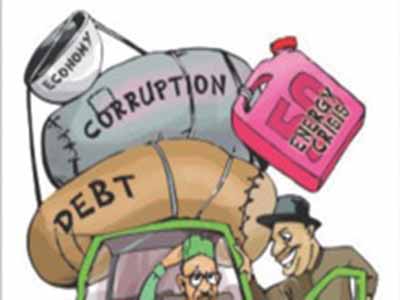
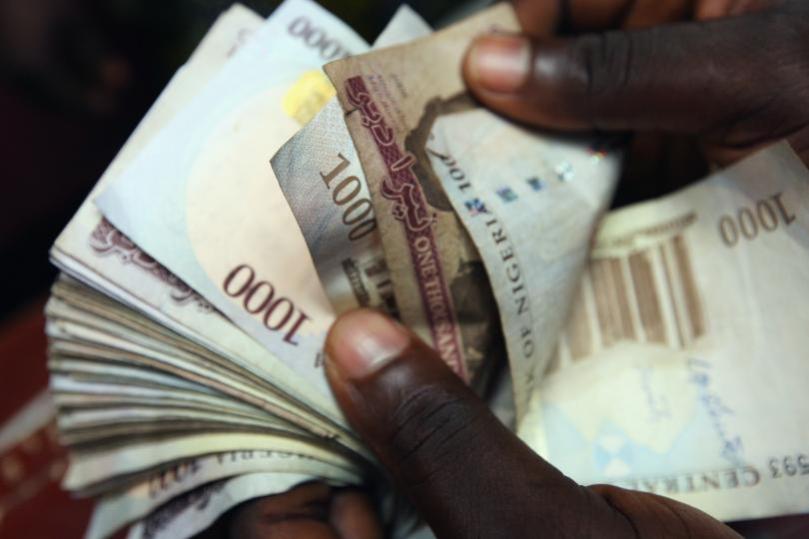
Nigeria’s economy has been on the red for a long time now. And this is despite her breathtaking endowment in human and natural resources. There are no jobs for the teeming youth population, the Naira-Dollar exchange rate is alarming, the pump price of petrol is too embarrassing for the current leadership of OPEC that she is, the rate of job loss is scary, and the import-export ratio is negative. To sum it all up, ailing is the word; all tales of Nigeria’s economy say it is an ailing one. And when people or things ail, we heal them; when problems crop up, we fix them. There has to be a way out.

Economy 2

What is the way forward? The simplest answer is diversification. The past many years have been much ado about diversification; successive Nigerian governments keep chorusing it. This way forward is simple because the first piece of advice one would readily give to a country that greases its economic wheel solely with oil, which has proven to be unreliable lately, is DIVERSIFY! The simplicity of this piece of advice also leans against the backdrop that Nigeria’s got enormous potentials in the areas of agriculture and solid mineral mining.

Why has meaningful diversification not happened? Simple: lip-service. Nigeria says she wants to diversify but does little or nothing to make it happen. Diversification is not a chance event, it is deliberate, it is purposive, and it calls for some concerted efforts. Diversification stems from the root word divert, and to divert is not just an action but one that entails the towing of a new direction, different from the status quo. These are indications of diversion to agriculture, for instance: the budget should reflect “agrocentricity,” a corporation that is larger than NNPC should be onboard, faculties of agriculture in all Nigerian universities should be tasked to revolutionary researches, senate committee on agriculture should be constituted, farmers should already start feeling the fresh air, the Land Use Act should be amended to reflect preference for agricultural usage. This can’t be exhaustive, but I’m insistent that meaningful diversification is more action-oriented than oratorical.

Secondly, it is high time the Nigerian-state got back to business. And this U-turn, if taken seriously, will be laughable at first. But everything good will follow soonest. The reason for its “laughability” leans against the backdrop that a certain Nigerian administration decided in favour of privatization, wherein practically almost every state-owned corporation was sold. How sincere can a marketing arrangement where the seller is also the buyer be? Yes, the men who sold in Nigeria’s name did the buying in their individual names. And so the likes of NITEL, Nigerian Airways, NICON, and tens of state-owned corporations vanished into thin air; they recently added NEPA. And the rationale behind this privatization exercise is embarrassing; they said government was a bad manager, and that private hands will do better at their management. What followed? Massive retrenchment of workers, underutilization of capacity; where is NITEL? In this regard, Nigeria must not only diversify but also play the mixed economy that she claims be, where both state and private hands jointly play in the field of producing goods, employing labour, and serving the citizenry. This is possible. How? Ask NIPOST that has long remained in the business of courier amidst competition with DHL, FedEx, etc. Ask NNPC that recently decided to get into the field of play with private oil players.

Nigeria must educate her citizenry differently. It is of utmost importance to sound this alarm bell: schooling is not education. This alarm bell is being sounded against the backdrop that education is identified with schooling in the Nigerian clime. And how is Nigeria paying for this error. Simple: thousand of unemployable graduates being churned out of her institutions of higher learning yearly. The goal of education is to see to a relatively permanent change in the behaviour, attitude, character, and preferences of a person through exposure to certain experiences. Education also goals to endow the learner with the requisite skills and capacity with which to function effectively as a member of the larger group, with a view to contributing their quota to both the maintenance and progress of society. School only comes in handy to see to the realization of these goals of education; school is not education. Truth be told, most Nigerian schools, especially the ones owned and managed by the state, are schools improperly called. Nigeria must do something about this – urgently! In countries where schools considerably deliver on educational ideals, the economy is run on the wheel of ideas and thorough researches from the ivory towers.

nigerian-naira-currency

In conclusion, Nigeria must go back to the word economy. That word is of Greek origin, oikos and nomos; while oikos is household, nomos is management. In its etymological light, economy connotes household management. And that word was employed by Aristotle in his Economy to discuss the economic activities of the household. The point here is simple: Nigeria should always bear in mind that the macro-economy is an aggregation of the many micro-economies, especially as run by the family units. This understanding is important because formidable micro-economies will see to a formidable macro-economy, and this is no magic. A properly educated family, for instance, is an asset to the state, while the reverse is a liability. How? The educated family is gainfully employed, pays taxes, invests in infrastructure, stays healthy… The poorly or uneducated family is unemployed and cries out for all forms of aids.