56th anniversary of ‘My Nigeria’: a good day to think differently

image
They can take all else, but they can't take our Independence Day!

About a month ago, a man I respected so much and admired from a distance insulted me. Perhaps he didn’t mean to, but he did. And he certainly didn’t know I felt insulted since I didn’t give him the slightest hint; I maintained my calm, kept my eyes glued to the floor, and endeavored not to take the insult personal. What was it all about, you may already be wondering. Simple: he needed to go through my work before endorsing some papers for me, and this was what he fired at me after reading the very first paragraph, “Sometimes you people write like you’re not graduates, not to talk of being graduates of the University of Nigeria. How can you be writing ‘My Nigeria’?” That I referred to Nigeria as ‘my Nigeria’ was my crime, for which I wasn’t a good writer, and for which my finishing from the University of Nigeria is questionable. However, I both laughed last and best when I observed he was nodding at subsequent paragraphs; he’d judged me too soon.

Leaving his office that day, it dawned on me that the one crime I’d love to keep committing, if it is indeed a crime, is say and write ‘my Nigeria.’ It is my Nigeria because it is the only country I can proudly call home, and the late Chinua Achebe would insist that ‘home is home’ – no matter what and where! Saying and writing ‘My Nigeria’ also confers on me a burden of responsibility, the responsibility of giving to Nigeria rather than only asking this or that of her. Yes, ‘my Nigeria’ confers a sense of ownership!

Today, the 56th independence anniversary of ‘my Nigeria,’ it behooves on me to think differently – and positively. It is a duty. I’ve to keep this in mind because the temptation to think otherwise abound. 99.9% of the things that would be said and written about Nigeria today will chronicle her tales of woes; the US in congratulating Nigeria already said she has a long way to go. Today, some will talk about her failure to get leadership right, some will lament her dilapidated infrastructure, some will decry her perennial romance with corruption, and some will report inefficiency of her various institutions of governance. And they will all be correct, since a whole lot is going terribly wrong in this clime. In fact, ‘my Nigeria’ seems to be cruising on the speed lane but doing so in reverse gear, a good example being the daily free fall of Naira to Dollar – it’s been falling as fast as it takes a drop of rain to hit the ground from the clouds.

Today, I must think differently – and I’m on it already. I must ask myself of what use I am to the ‘Nigerian project.’ I must tell myself the truth about what contribution I’m making towards the way forward. I must think about how ready I’m getting to feature among the next generation of Nigerian leaders. I must resolve to criticize those at the hem of affairs only constructively, and never insanely. Today, I must personally think differently. And I hope I’m not going to be doing that alone. I hope a number of other Nigerians will do same, especially you.

image
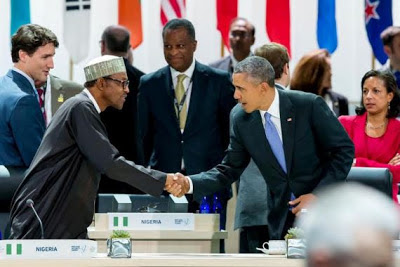
Congrats to the President of 'My Nigeria' on Naija@56

God bless Nigeria. Always.

“Every little counts”: The day Sammie finally landed his dream job

Samuel ‘Jideofor’ Okonkwo

This is the very third piece on Samuel Jideofor Okonkwo ‘Sammie’ on this blog. Don’t bother wondering why, because I’m just about to let the cat out of the bag. Simply, Sammie ‘is’ my teacher, and he’s such an inspiration that the best I can do for God and the rest of the world is to share him, to talk about him. Heaven and earth, and even hell, know that what I’m doing is right and just. lol! And the choice of sharing him with friends and the virtual public has yielded much fruits: Sammie’s story has inspired many and challenged many more. He promises to inspire you, too. To catch up on our gist on Lagos Island, the very first of the ‘Sammie series,’ check here. To catch up on the longest day of Sammie’s life, his recruitment day, check here. The present piece is a sequel to his recruitment day story.

When on that faithful day, January 14, 2011, while a finalist in the Department of History and International Studies, University of Nigeria, he signed up with Blogger, and then did his first post on ‘Atiku,’ Sammie didn’t know, and how could he have known, that the decision to start blogging will make all the difference in his life three years away. Funnily enough, that first blog post only got published on the third attempt; what if he’d given up after the first or second attempt? And then Sammie has kept at blogging until tomorrow, which is to say that he has consistently blogged for more than five years; five years and eight months to be precise. However, there is something else about Sammie’s blogging that I’m up to in this piece.

The last story about Sammie, his recruitment day, ended on the joyful note that he succeeded in beating his stiffnecked competition. But I left a hint that there is more, and this is it: he didn’t land the job that day. Yes, three of six got eliminated, but none of the remaining three got an offer; the recruiters still wanted one more out, since they had the mandate go trim the 42,000+ qualified applicants down to just 2. There was no vacancy for three, it was just for two. However, something more happened there: the recruiters had exhausted all their recruitment strategies, and couldn’t afford to play unfair; they knew ethics. In addition, they were willing to stop at nothing to trim down three to two. It was a tall order. What they did next will shock you.

They flew the last three standing to the headquarters of the multinational, and turned them in to the MD, asking him to make his pick by whatever yardstick he chose, given that they’d exceeded their elastic limit and were already breaking. But the MD wasn’t willing to make such a crucial pick alone, and chose to do it in the company of his continental heads. The task was tough: the very best two had to be picked from the very best three. This is exactly where the story gets interesting…

They were to appear before the panel of bosses one after the other, and Sammie was the last in the order of calling in. After all, ladies first. And may it not shock you that the two others were ladies. These days ladies slay, you know. Each of the other two spent an average of 45mins answering all manner of questions, and you can trust that they were those sort of questions that the how of answering was more important than the what of answering. And then Sammie was up for his turn…

This is the highpoint of the story. Sammie had barely walked into the room when the MD called him by his name, “You’re Sammie, right?” Of course, you may want to think that he had his CV before him, but he went on to add, “I read your blog.” ‘Read’ is not past tense; it’s in the sense that he follows his blog. You may also want to think that the MD was playing smart, such that he only checked it out after he was handed Sammie’s CV. You’re wrong. Yes, because what followed next will shock you. The MD raised up for discuss with Sammie a post he’d done a long time ago – on a tennis player they fan in common. I remember that name: Djokovic. That lasted barely 2mins. Then the MD raised another blog title on Nigerian politics. Lasted barely 2mins again. And that was it! He then asked Sammie to be on his way already.

You can guess that Sammie was as shocked as he was afraid. He didn’t know what to make of that encounter. Given that he spent barely 5mins in there when others had spent about 45, and given that he got to answer next to no serious question, he didn’t know what to expect; his fears told him he was out. But not him, one of the ladies was. He got the job! Of course, there is no fair policy that says an employment of two must be male and female; in case you’re starting to think that one of those ladies inevitably gave way for Sammie. That would have happened on recruitment day already. They even got her back months later when an emergency opening surfaced.

The moral of the story: every little counts. Even amateur blogging can make all the difference on judgement day.

This is Sammie…

Lessons learnt from watching Rangers and Sunshine Stars tough it out for 90+3mins

image

It was on a Sunday, the 18th day of September 2016 to be precise, and I went in the company of two incredible friends, Vivian the Great and Vingabby. Kickoff time was 4pm (GMT+1), and the battle line was drawn between Rangers International Football Club of Enugu and Sunshine Stars of Akure at the Nnamdi Azikiwe Stadium, Enugu. The long and short of the game is that after toughing it out for 90+3mins, the game ended in favour of Rangers; 2:0 to be precise.

It was my very first live match, and I made sure nothing stood in my way of attendance that evening, not even the threatening rain. I actually thought I was too old not to have witnessed a live match off-screen, just as I had to storm Lagos earlier this year because I’d always thought it was such a shame that an above twenty-year-old Nigerian who claims to love Nigeria was yet to step his feet on the Main- and Island of Lagos.

I came to break that jinx, I came to have fun, but I ended up in a classroom. The bowl of the stadium had turned into a classroom, other spectators became my classmates, the pitch metamorphosed into the ‘smartboard,’ and the players and the reality of football, being the teacher, graciously dished out the following lessons.

Life is a game

Biblical parables often compared the kingdom of God to this or to that – merchant, king, sower, virgins, feasts, etc. On this occasion, observing the players and the field of play, I came to the realization that life can indeed be likened to a football game. Or, put differently, and better, football aptly showcases the dynamics of life: the goal, the timing, the fouling, the cards, the linesmen, the spectators, the applauding and boos, the fun, the referee, the etc. To merely say that the leather ball game mimics real life is to say it lightly.

The two kinds of people

It has always been about Actors Vs Spectators. That day, I inevitably found myself – and everyone else off pitch – occupying the spectator position. While the players did the sweating, the rest of us had fun watching them. While their hearts raged within them, while their muscles cramped and their legs ached, the rest of us made jokes of their pains, cheered them on when they impressed us, and jeered at them when they seemed not to get it right. From the spectators’ end everything was so easy; talk is cheap! That day, I got the gracious reminder that living truly can only happen at the ‘acting end’ and never at the ‘spectating end.’

image

Unstoppability is a choice

And then the long awaiting rain started pouring down! It was hell. I got totally drenched in it. Guess what? While we the spectators were running helter-skelter in search of canopy, the actors (players) chose to be unstoppable. They played on under the rain as well as they were playing under the sun minutes earlier. Not even one of them stepped out of the pitch. And not even the referee.

Leverage on what you’ve got

Rangers is Enugu State football club. The match held in Nnamdi Azikiwe Statium, Enugu. 99% of spectators were 042 people. Rangers had all the additional advantages, and they did leverage on it. It was their pitch, their town, and their people. They weren’t lacking one bit in fan base, since next to everyone was their fan. The applause was for them and boos was for their opponent. They were in high spirits, and they capitalized on it.

Fight to the death!

This golden lesson came from the Sunshine Stars. Though they were at the disadvantaged end, they kept faith till the very final whistle. They pressed on, they persisted, they kept at it, and they fought on – to the death! Being down by 2 goals by injury time, they even pushed harder until the referee blew the final whistle on one of their men motioning towards Rangers’ goalpost with the ball.

image

PS: Special thanks to Vingabby for being a constant reminder and a great company. Thanks, too, to Vivian the Great for giving the evening a touch of fun; she pushed us to dancing under the rain with Rangers fan club.

Leadership 2.0: Rediscovering Leadership

1

Leadership is one of those words that can do without the dictionary, as only a handful of people are in want of its meaning. The word is so much in common usage that it ranks among the so-called household words. And the reason is not far-fetched: leadership is ubiquitous; leaders are everywhere. Yes, the father heads the family, the principal administers the school, the community head ensures order therein, the governor pilots the affairs of the state, the pastor pastures the flock of God, the president presides over matters of state, the Pope oversees the Holy See. What more could the dictionary say about leadership if not to restate the obvious.

Of course, the unintended consequence of the above thinking about leadership is that it causes one to identify leadership with headship, to equate leadership with administration, to restrict leadership to positions of authority, to domicile leadership in America’s White House, Nigeria’s Aso Rock, or Britain’s 10, Downing Street.

A sequel to the above is that one is forced to characterize leadership by the mannerisms in which those hitherto identified as leaders conduct their leadership business. Therefore, because the head of the family is wont to wielding the rod at the slightest provocation, the growing child gets socialized into thinking that rod wielding is integral to leadership; because the principal of a school lords it over his or her teachers and students, some students may begin to think that ‘lordship’ is a corollary of leadership; because the pastor of a church threatens to rain down fire from heaven at the slightest infraction of church rules, faithful followers begin to imagine that it is part and parcel of the leader’s job description to secure conformity through the issuance of threats and sanctions.

The preceding exposition aptly captures Leadership 1.0. In the Leadership 1.0 era, leadership was equal to headship; leadership was synonymous with lordship; leadership was resident in the head that bore the crown and the legs that wore the shoe. In that era, too, there was a clear-cut distinction between leadership and followership. Here, while the leader takes both the frontline and first position, the follower can at best be second; while the leader dishes out orders, the follower takes them and orders themselves accordingly; while the leader is blue-blooded, the follower has the usual red blood. For every groundbreaking feat, for instance, while the leader points to the ground, the follower breaks it.

However, gone are the days of Leadership 1.0. Welcome to the era of Leadership 2.0! Call it Advanced Leadership if you like. Mind you, it is not advanced for its sophisticatedness; it is advanced for its simplicity. It is advanced for its openness, making it possible, for the first time, for anyone who is interested in leadership to become one – blueblooded or red-blooded. As much as the father, a child can be a leader; as much as the CEO of a multibillion dollar company, a janitor can be a leader; as much as the Pope, a catechist can demonstrate leadership; as much as the master, a slave can have a bite of the leadership pie; as much as the ‘leader,’ a follower can have a taste of leadership.

Leadership 2.0 is a total rethink on leadership. In it, revolutionary thinking was brought to bear on the all-important enterprise of leadership. In fact, it is a revolt on Leadership 1.0. And the essence of Leadership 2.0 is to democratize leadership, to make it “of the people, by the people, and for the people.” It essentially distils out the core of leadership, and goes on to strip it of all the addenda and paddings that make it heavy and complicated.

What, then, is Leadership 2.0? Inspired by the works of the likes of John Maxwell and Robin Sharma, Leadership 2.0 locates leadership in one word, INFLUENCE. And the choice of this one word is not far-fetched, as every manifestation of leadership, even in the Leadership 1.0 experience, is built on it. By the way, ‘influence’ simply means “the power to affect, control or manipulate someone or something. Although ‘influence’ is significantly wielded by those who occupy positions of authority (the leaders of the Leadership 1.0 era), it is not at all their exclusive preserve; Leadership 2.0 insists that anyone, just about anyone, can wield ‘influence.’ This, of course, is another way of restating the fact that anyone can be a leader.

A classic example of Leadership 1.0 Vs Leadership 2.0 is the discovery of the external installation of elevators. El Cortez Hotel is one of San Diego’s famous hotels. Once upon a time, the hotel management decided to install an additional elevator to better serve guests. While the contracted engineers came up with complicated designs that called for cutting holes through each floor of the hotel, which, of course, will cost the hotel a fortune, and pile up mess for the janitor to clean up, the eventual solution came from the janitor’s comment: “You could build the elevator on the outside of the hotel.” Here, we learn that even janitors are capable of thinking outside the engineering box; they mustn’t have bagged an engineering degree, or registered with the engineering council.

A more ad rem example of Leadership 1.0 Vs Leadership 2.0 can be gleaned from Thomas Edison’s laboratory, in J.P. Morgan’s words, “where genius resides.” At 31, Edison already had about 400 patents to his credit, and had become one of the greatest scientists ever. The zenith of Edison’s scientific feats was the perfection of electricity. But it was the Direct Current, inferior to the later Alternating Current. Guess what? Both electricity current designs were developed in the same laboratory: Edison’s. However, while the boss (Edison) was responsible for the inferior one, D.C., the apprentice (Nicola Tesla) was responsible for the superior one, A.C. And when apprentice reported his development to boss, apprentice’s noble development was talked down on; Edison told Tesla his A.C. design couldn’t amount to much. The long and short of it is that Tesla’s A.C. later edged Edison’s D.C. out of the market, went on to crash the party on Edison Electric Company, and remains the electricity standard till date. In Leadership 2.0, as already stated, apprentice can do as much as, and even better than, boss.

2

American youths Vs. Nigerian youths: Why the so much gap?

nigeria-youth

There is a famous picture in the United States of baby JFK, Jr. crawling under the Resolute Desk of the White House Oval Office while his father worked on it. John Fitzgerald Kennedy, JFK, Sr. (the baby’s father) was the 35th President of the United States of America, one of those to be assassinated. That crawling lad was born to him few days after he won the US Presidency in November 1960 and remained in public spotlight until he died in a plane crash sometime in 1999. The 6th President of the US (1825–1829), John Quincy Adams, was the son of the 2nd President of that country (1797–1804). In the same vein, George Walker Bush, the 43rd President of the US (2001–2009), is the son of George Herbert Walker Bush, the 41st President of that country (1989–1993). Again, standing on the steps of the Lincoln Memorial in Washington D.C. on August 28, 1963, Martin Luther King Jr. announced to an unprecedented crowd of 200, 000 civil rights activists, and indeed the world at large, his dream of a truly free United States of America. Whether the US is truly free today is a different story, but we do know that about 46 years after King’s epoch making I Have a Dream speech, Barack Hussein Obama became the first black human being to mount the US Presidency, or, should I say, the most powerful human being on the planet. From this survey, therefore, there seems to be a certain degree of sincerity in addressing youths of America and elsewhere as leaders of tomorrow.

I wonder if the same holds true for our country, Nigeria. Few examples will do. When General Olusegun Obasanjo was Nigeria’s Head of State way back in 1979, he had addressed a group of youths, wherein he told them he looked forward to seeing them take over the reins of power in the nearest future. Funnily enough, exactly 20 years from that year, that is 1999, he vied for the office and became president again, remained there for 4 more years and wanted to bend the constitution to let him stay on, and would have asked for more afterwards, I guess. Go through the annals of Nigeria’s history and find that our great grandfather’s Heads of State still want to be our president, and are not joking about it. Check out the résumé of President Buhari and find that he’s been there a very long time ago. Go through the Nigerian Civil Service and find grandfathers who should be glorying in their pensions and be tenants of retirement homes still posing to be 50 years of age with the assistance of our interesting instruments of corruption – affidavit swearing and Declaration of Age. And yet we find energetic and promising youths languishing under the yoke of underemployment and unemployment.

The case here is that of a conspiracy of the rich and those who thread the corridors of power. They want youths down. They want them to be and remain incapable of questioning or challenging the status quo. They want them to accept the status quo for a culture and be too blind to spot and spoil their greed. And it actually appears they are succeeding if at all they haven’t. How? Through their educational designs and obsolete curriculum they make youths unemployable; through their emphasis on security they dissuade youths from resorting to crime; through their sabotage of the economy they discourage economic adventure, the type the likes of Gates, Jobs, Zuckerberg, Musk, etc. dabbled into in America to make their way to the billionaires club. What do we find around us instead? They want youths to get their eyes off white collar jobs and embrace the various available farming schemes. They offer enticing loans to NYSC pass-outs and have students compete in writing and executing business plans. In one word, it is difficult to trust that the system cares about youths and it appears that only death can muster the courage to kick them out.

The one million dollar question becomes: “What do we do?” Rising to mutiny, that is killing every single one of them, is not at all a part of the solution. This is because our children will hold us responsible for the blood of their grandfathers. Ruffling it out with them is not the solution either, as one should be sure of losing out on the game, given that they are pretty good as what they do, in addition to the fact that they made more than enough pluck when our money grew on trees – they own all the oil wells, bought up most public enterprises in the name of privatization, and equally have a cabal of Machiavellian capitalists who throw their combined weights behind them in return for profitability from their mischief. Furthermore, while they can be said to have the repose of wisdom, which is got from experience, youths are, more often than not, impulsive in deciding what course of action to take.

What then is the way forward? The answer is quite a simple one and is hidden in the understanding that the future is now! You just need to understand that your future is now, and then start living in it. I can explain. To start with, what is your take on the idea of future? Is it something faraway, near or now? Do you wake up every morning in joyful anticipation of ‘a time’ called ‘future’ when all your dreams and noble aspirations will come through? This is correct only insofar as you are viewing the matter in the light of conventional wisdom. However, the problematic encountered in seeking a deeper understanding of the concept of future, the type sought for here, is that of the concept of time. Suffice it therefore to say that our understanding of the concept of time is the point in question here, as the terms past, present and future, or yesterday, today and tomorrow are only nomenclatures that express time.

At this juncture, let’s turn to St. Augustine to tell us something about time. For him, the concept of time is elusive, one that is understandable but incommunicable. He confesses, in his Confessions, that while he knows what time is, his knowledge of it eludes him whenever he attempts to communicate it, reason being that the components of time (past, present and future) barely exist: the past is no more, the moment is passing, and the future is not yet. Therefore, this ‘present passing moment’ is all we have got to grapple with.

And so ‘getting involved’ in this ‘present passing moment’ is the key to doing battle against the Nigerian status quo. When you get involved, you rather than blame or complain against the situation take responsibility for whatever has become your lot. It demands that you do whatever you say you want to do – never caring about your detractors – because your word is your bond. It calls you to the realization that your destiny is in your hands, and you never want to trade it for a bowl of porridge. It emboldens you to go out there and get all you need to become all you want to be. It instructs that the only limits are yours to decide. It means that you daily become what you aspire to become by the quality of every single choice you make and every other decision you take. Yes, it is that simple, except that you have decided to busy yourself with gossips about a system that cares little or nothing about you.

For instance, what do Nigerian youths do with the many months of strike whenever the Federal Government and the Academic Staff Union of Universities (ASUU) want them out of school? I bet you that many youths will spend their time making jokes of it on social media, while many others will spend it doing one stupid thing or the other. And if one continued this way, why complain about ending up on the downside of things? I understand that the status quo has put many in critical positions, but there is absolutely no need to enjoy such an experience. Get involved!