It pained me so much that I cried, and now I dare to say: plan for that part

image

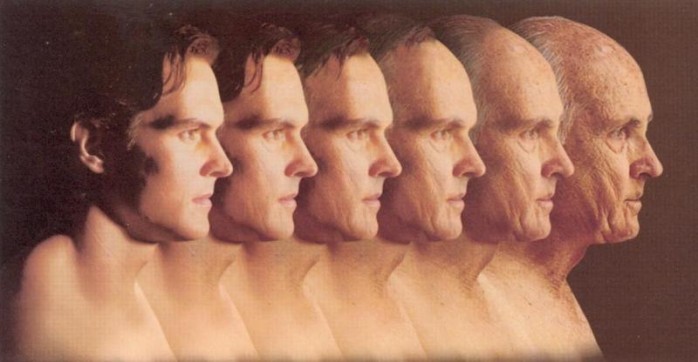
They say that men are in sizes and life is in phases. This is true. But while we can’t do much about the phases of life, given that every baby passes through, all things being equal, childhood, adolescence, adulthood and eventually turns old someday, we can bargain our sizes. Yes, our daily actions and inactions, choices and decisions are just one sure way of cutting our sizes in life, especially as to whether we turn affluent or wallow in lack. To say the least, success is rarely accidental; it is more of, in Steve Jobs’ words, “connecting the dots” – looking backwards.

I wish to immediately take an exception to any argument that imports the “invisible hand” into the equation; call it ill-fate, karma, or whatever. Of course, these things may be real, but bringing them into the equation has this embarrassing way of messing things up, especially the likelihood of excusing those caught up in the web of the so-called “ill-fate,” and perhaps giving those of unfortunate background a pat on the back. Even at these, we’re masters of our fate, plus we don’t have to let our background pin our back to the ground. But if one insists that the devil has the capacity to crash the party of one’s life, then I like to remind us that we’ve the mandate to resist the devil and he would flee.

It was past six pm yesterday. I’d just finished the day’s exam two hours earlier; stopped by to deliver a package to someone I’d given my word the previous night, and was headed home. Before I knew it, my heart skipped a beat; my heart had seen it before my eyes did. And when my eyes caught up with the pace of my heart, it was an old man lying face-flat by the road. I’m not particular sure if the truck hit him, but the truck was responsible for his warm embrace with the ground. And since my Christ had asked me to go and do likewise the Good Samaritan, I immediately dashed in his direction. Painfully enough, I couldn’t lift him up all by myself because the old man was gross. And then a second and a third help arrived, and we did it together. Until I felt him move his body I feared he’d died, and I’m too grateful to say that the risen Saviour spared his life.

Now, this whole episode got me thinking. It pained me so much that I cried. You know that sort of crying that didn’t require shedding of tears; I spent my long journey home beating my breast in sober reflection on what had just happened. And I asked myself a million and one questions, starting with: “What would old-age look like for me?” Yes, if God doesn’t change his mind, and He’s not a man that He should, I’m sure of old age; He promises to satisfy me with long life, and anyone who believes, too. Other questions were: Why was he out that evening all by himself? Why was he dealing with over-the-counter drugs? That was what he had in his hand. Why wasn’t he in his car with a paid driving behind the steering? Why? Why? Why? It pained me so much that I cried. And it still pains me.

Obinna now calls me a blogger. Though I feel odd in that title, I thought it wise to instructively blog that incidence. And the rationale behind this blog post is so that we don’t get to identify with this man’s story when old age comes around. For God’s sake I’m not being judgmental about the old man, but I’m simply saying that his experience holds some moral lessons for us. Of course, he might have had a car parked at home no thanks to the pump price of petrol, N250 as at the time of the incidence; he might have had a number of people to send on this errand but decided not to bother them, perhaps to know some fresh air; he might have been a patient of one of the finest private hospitals in town and only came over to the local pharmacy to pick up a dosage he ran out of. These are possibilities and I’m aware of them. And so, this post is not so much about that particular old man as much as it is about us who are yet young and would someday get as old as him.

These days I’m not quick to dishing out pieces of advice, especially with regards how to run people’s dawn to dusk. I realized we’re all pretty good at fixing our things. However, I’m insistent that we must bear in mind that someday old age will come around with its many challenges and difficulties. And we stand the chance of spending it at the mercy of Good Samaritans if we don’t consciously and prayerfully plan things out ourselves. Let me quickly let us into the part of the Good Samaritan parable that Jesus didn’t bring in the picture. What if the Levite was the last human being that took the road from Jerusalem to Jericho that day? Simple: the man attacked by robbers and beaten half-dead would have simply died. What am I saying? If we make a plan that leans on the possibility of a Good Samaritan showing up to lend a helping hand, then we should not be in a haste to forget that it is only a possibility. Probability is a better word. Gambling is just about the best word.

And now I’m compelled to leave this piece of advice: DON’T GAMBLE OLD AGE. That’s certainly a really bad deal.
Why Obama thinks Trump can’t be president and what Nigeria should learn from POTUS

potusB_art_hires_06db785d-4967-4615-a1c3-d08b675b1761_2048x2048

Whenever the Pope drops dead and this is rare, the media takes it up from there with this gossip lead: “Who are the papabiles?” To put it simply, “Who are the likeliest cardinals to become pope? This is not minding the fact that any one of all the more than one hundred cardinals that are behind the sealed doors of the Sistine Chapel for the conclave can become pope. To say the least, the media have seduced us into believing that some cardinals are more papabiles than others, and this is possibly true. Why, because the man who becomes pope equally becomes the most influential human being on the planet; a man whose word is God’s law – for Catholics. Of course, no one expects that a “misfit” occupies such an exalted and extremely dignified office.

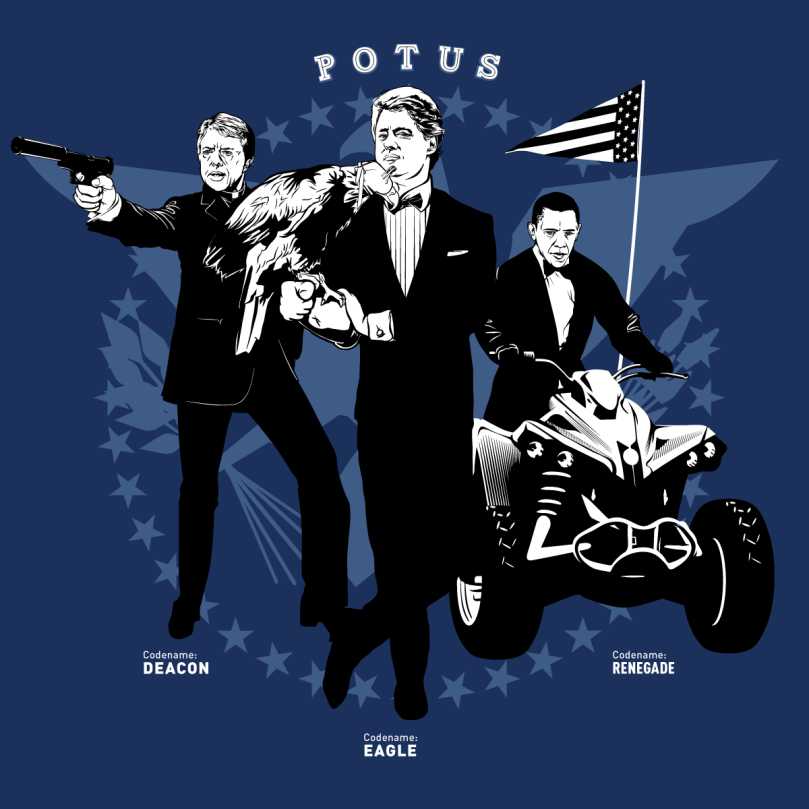
In the same vein, whenever the tenure of the sitting POTUS (code name for President of the United States) would run out in about a year’s time, the heat for his replacement gets turned on. As it were, many Democrats and Republicans start declaring their interest for the White House. Then follows the campaigns, party primaries, etc. So far, the race has been thick, with especially Trump and Clinton looking promising to be fielded for the Republican and Democrat parties respectively in the forthcoming presidential polls.

November 8 will be poll day, and Americans will decide who succeeds Barack Obama whose second term in the White House will run out in January 2017. But Obama thinks that Donald Trump is not the man for the job. His reason: POTUS is serious business. Though Obama’s opinion may not be strong enough to swerve the American public away from Trump, but being POTUS for 8 years now makes his opinion count.

Now, I like to make this point: the greatness of America as a country is a function of the great POTUS tradition that has been passed down from George Washington through the likes of Abraham Lincoln, Theodore Roosevelt, and Franklin Roosevelt, John F. Kennedy to George Walker Bush and Barack Obama. To say the least, every American president is a colossus of some sort; an eagle to say it lightly. Mind you, it is not in being POTUS that they go colossal; their being colossal got them to become POTUS. In essence, Obama’s disapproval of Trump was a coded way of saying that Trump is not POTUS material.

Who is POTUS material? He is not necessary affluent. He is not particular handsome; Lincoln wasn’t one bit. And it is very important that I point out that some POTUS couldn’t deliver. Herbert Hoover, for instance, performed far below average in the wakes of the Great Depression; he assumed that the Depression was part of doing business and expected it would resolve itself in a year or two. He was wrong. However, it took the intervention of Franklin Delano Roosevelt’s New Deal to tidy things up. And so, find POTUS material in George Washington, who saw to the success of the American Revolution; find it in Abraham Lincoln, who ensured that the Union remained intact; find it in Franklin Roosevelt who got the Empire of Japan to its knees when he sent them a package that would go on to remain historical forever – atomic bomb. And Obama suggests that you won’t find it in a man who would have Mexico sponsor the raising of a wall on the US-Mexican border – Trump.

This piece is more about Nigeria than it is about America. Fellow Nigerians, could we start up our own version of POTUS please? Maybe we get to call ours POTFRON – President of the Federal Republic of Nigeria. And it’s not just going to be about the name, but about the cult of excellence that it would showcase.

#proudlyNaija!

“That boy calls you father. Do not bear a hand in his death.”

100928-Father-And-Son

Chinua Achebe’s Things Fall Apart is a transgenerational masterpiece for more than one reason. Some of the obvious reasons are: it’s sold between 15 and 20 million copies, and it’s been translated into over 60 global languages. If these stats are true, then you can trust that so many people all over the world are in love with that book. For foreigners, it would be its masterful exposé of Africa (Igbo); for those of us it projected, the Igbos, Okonkwo’s kith and kin, it fuels our ego to know that the rest of the world are in love with our ways as projected by our very own son.

But Things Fall Apart is a great piece for more than the preceding reasons. It is particularly great for the many lessons and nuggets of wisdom it embodies. The proverbs, for instance. In line with the Igbo-way, Achebe liberally sprinkles the pages his opus magnum with lots and lots of them, and goes on to call them by their traditional proper name: the oil with which words are eaten. Again, Things Fall Apart typifies what a great piece of literature should look like: simple and beautiful. Achebe says big things in sophisticatedly simple ways, and gives them all the coloration with the various and varied literary devices they need to stand out as chic. For instance, Achebe makes allusion to “those days when men were men.” And when he would describe the wrestling contest between Okonkwo and Amalinze the Cat, one would already begin to feel like watching it real-life. “The drums beat and the flutes sang and the spectators held their breath. Amalinze was a wily craftsman, but Okonkwo was as slippery as a fish in water. Every nerve and every muscle stood out on their arms, on their backs and their thighs, and one almost heard them stretching to breaking point. In the end Okonkwo threw the Cat.” Can you feel those lines? Even the cat metaphor used for Amalinze is something!

The part of Things Fall Apart that particularly concerns this particular blog post is a peculiar lesson Achebe leaves us all, those of us that play mentorship. To qualify them as words of wisdom, Achebe puts them in the mouth of the oldest man in Okonkwo’s quarter of Umuofia, Ogbuefi Ezeudu. Needless to say that age is wisdom for the African, especially the Igbo. And so, these immortal words fell from the golden mouth of Ogbuefi Ezeudu to the deaf ears of Okonkwo: “That boy calls you father. Do not bear a hand in his death.” It’s going to be a very long story putting those words in context for those who haven’t read Achebe’s Things Fall Apart. Pardon me that I won’t retell the story; Achebe already did. Read Things Fall Apart for yourself. However, the long and short of it is that “the ransom Ikemefuna” had grown up to know and call Okonkwo father, and the Oracle of the Hills and the Caves had just decreed that he be killed. Since Okonkwo was one of the elders that will execute that decree, Ogbuefi Ezeudu advises him to, while being present at the event, refrain from bearing a hand in the very act of killing Ikemefuna – because he calls him FATHER.

But Okonkwo wouldn’t listen. And like Brutus of the Shakespearean Julius Caesar, it was him who struck the blow that saw Ikemefuna dead. This was exactly what happened:  He [Okonkwo] heard Ikemefuna cry, “My father, they have killed me!” as he ran towards him. Dazed with fear, Okonkwo drew his machete and cut him down. He was afraid of being thought weak.” Commentators have it that Okonkwo’s defiance to those prophetic words of Ogbuefi Ezeudu was the very foundation for his own ‘things fall apart’; everything dramatically turned against him, and he even ended up in the worst of ways – suicide.

In essence, and my point is: To play father figure to anyone is no mean business; it is big business. When the Catholic Church chose that word for their pastors, they knew the deal they were cutting, and woe betide those “Fathers” that are oblivious of this deal their forebears cut on their behalf. Just for the reason of being called “Father,” the wise Ezeudu knew that Okonkwo was disqualified from bearing a hand in Ikemefuna’s death – inasmuch as he couldn’t stop it. Even the Greatest Man that ever lived – Jesus Christ – had something to say to this effect: “He deserves to have a millstone tied around his neck and then thrown into the sea.” What a fate!

The variant of “Father” most of us can identify with is “Mentor.” They mean the same thing. Someone walks up to you and requests that you guide them through one, more or all aspects of life. Mentorship is the word. I like to announce to you that you’ve just got some responsibility laid on your shoulders and there is no need popping champagne about it. This responsibility leans against the backdrop that the words of George Orwell through his Animal Farm’s Boxer character would always dominate the heart and mind of the mentee: “If Comrade Napoleon says it is, it must be right.” What if the mentor was wrong after all, and had deliberately chosen to mislead the mentee to his/her own advantage? You see why a millstone should be tied to their neck…

In the name of mentorship a lot have gone wrong. And your guess is as good as mine. This must not apply to us. In essence, whoever dares to call us father should be given life not death; should be guided aright not taken advantage of. This is extremely important, for it can turn our fate around – for good or bad.

Ask Okonkwo.

Why we should beware of the bad news trade by the mass media

badnews
Terror Headline Collage

I once heard Nigerian Bishop David Oyedepo say he doesn’t read the dailies; he almost never does! Truth be told, his claim got me thinking, especially as to whether it is possible, and, also, as to whether it is patriotic. While still brooding over Oyedepo’s claim, a certain great motivator, one I respect too much, Robin Sharma, the legendary author of the breathtaking The Monk Who Sold His Ferrari, advised: sell your television. With this witness of two truly great men, the minimum number required for authentic witnessing, I just knew that something must be fundamentally problematic about the mass media.

But I should have known better, earlier. One fine thing studying philosophy at UNN did for me was that it got me into taking a bit of many different courses in the social sciences, arts, general studies, physical sciences… Yes, I did one or more courses with Foreign Languages, Economics, Sociology, Psychology, Religion, Computer Science departments and General Studies Unit. I particularly did four (4) courses with the Department of Mass Communication: Theories of Mass Communication, Principles of Advertising, Features and Interpretative Writing, and Editorial Writing. Of course, I’m not drawing up this list of courses to impress, but to say I got an appreciable insight into what happens on the mass media, and it is this: Bad news is business; good news is no news at all.

In Principles of Advertising, for instance, my professor taught me that it’s all about playing on the gullibility and sensibility of the people. Else, what’s the big deal about signing P-Square and other top-rate Nigerian artists and actors as Globacom ambassadors? Aside cowing their fans into taking Glo offers seriously, what else do they bring to the table? Nothing, actually. You see, that’s the game. Ms Ohaja of Features and Interpretative Writing and Dr. Ukonu of Editorial Writing both agree, and taught me, that it is all about the title/heading and a compelling lead. In their very own words, “Make it catchy.” And catchy is to catch, isn’t it? Let me already say that this is one reason why news shouldn’t be taken seriously. An example will do in this regard. This once ran on Vanguard: “Why I hate Okocha – Oliseh.” Truth be told, they caught me there; I was dead curious about why Oliseh should hate my dear Jay-Jay. And guess what I gathered from my anxious read? “He always beats me in our tennis play at Sheraton.

On CNN, AIT, NTA, Al Jazeera, BBC, NBC, Vanguard, Punch, Sun, Times, and every other mass media outfit you can remember, the story is no different. It is the business of bad news. And truth is that they get handsomely rewarded for it; their profit statement is unbelievable. They specialize in covering accidents, conflict, civil unrest, political instability, war zone, celebrity gossips, etc. These are all junks for God’s sake, and the least thing any serious human being needs to get a great day up and running. With their Agenda Setting power, they cow us into thinking and talking about what they want us to talk about. A good example will do. When the Chibok girls got missing, the media made it all about #BringBackOurGirls. After over a year now, no single media house, including CNN, remembers that our girls have not been brought back. What about Boko Haram? Are we done with them? No. But they long stopped making the kind of headlines they use to make.

Now, it is important we diagnose the problem, and then attempt saying a possible way out.

There is simply this part of us that craves bad news, which serve to confirm our fears of a troubled world. When a plane goes missing or a car crashes, we just want to know when, where and how. Not so much about doing something about it, but about both the joy of knowing and the reminder that “earth is bad.” And what does that leave us with? Nothing, I suppose. Again, there is this way we want to catch up with the joneses through being in touch with the latest happenstances around the globe; how we don’t want to be left behind. Perhaps that’s why we see a thousand and one fellas at the news stand every morning whiling away their time.

I must immediately save my head. Being in the know of happenstances around town is right and just; our safety even depends on it. However, I’m vehemently against our obsession about it. In fact, who says you must read today’s papers today?

This is one way forward. Realize that they’re two classes of people in this regard and choose where you belong: those that make headlines and those that read headlines. You choose. To make headlines, then you’ve to be caught dead diehard busy. To read headlines, then just walk up to the nearest newsstand and invest some good deal of your time reading, commenting and complimenting.

Finally, aside weather reports and business news, as to whether to go out with an umbrella or not or whether to put a call across to your stockbroker, there is really next to no item of news on any mass media platform that is worth the mad rush. You could even read the weather yourself and ask your stockbroker to alert you whenever a fair deal pops up. In all, while the mass media busy about their business of bad news, why not face your own business.

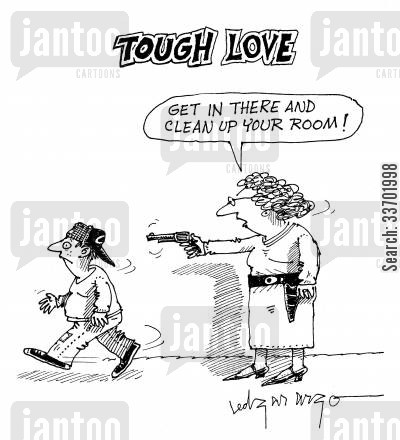
Tough love: love at its finest

image

Until I went over to boarding school for some realtime chiseling, I was a perfect example of mummy’s pet. Aside being her child, I was her last son, and I’m now learning that mothers are particularly into their last sons – having a younger sister, mum’s last child, didn’t reduce my preferential treatment one bit. It was so bad that mum only says ‘no’ when she couldn’t afford my request. I remember her going such extra miles like: buying the food of my taste when she’s got some food in the house; turning her last dime over to me because I needed to buy this or that. It was that bad.

However, it wasn’t really that bad. This same woman, my mother, did something that forever remains vivid on my mind. Yes, it is so vivid that I can still see the very faces of those that saved the day. On that fateful day, mum left me a simple and straightforward instruction: stay here watching over this stuff while I go over to the market with Nne (my younger sister) to get something. No sooner had she reached the market than she saw her dear son playfully following from behind. Unfortunately for me, I had an interesting cane in my hand with which I played. And that was it for me! As soon as I got close enough to her, she made for the cane in my hand and gave me that sort of beating I still vividly recall after more than 15 years. It took the intervention of really determined market women to get her to stop. Interestingly, I deserved every bit of that beating as the damage she foresaw happened back home while I was away.

I still wonder how she was able to do that; how she could beat me so mercilessly that the fear of my passing out or away didn’t cross her mind; how my ‘saviours’ almost couldn’t contain her rage. I got the answer to those puzzles in my recent visit to Lagos (I’m back to base already); someone shared the theme of ‘Tough Love’ with me. His name: Base One.

On one of my days in Lagos, I took a trip to Wazobia TV, located on 267A Etim Nyang Crescent, Victoria Island, to see Ezeugwu Chukwudi, the anchorman of the highly informative and rib-cracking As E Dey Hot. Kamikaze, as we fondly called him back in the UNN days, was Sammie’s best friend and always came around our place, and I’ve always known him to be amazing. And so I went to see him. But I had to wait for him since he was held hostage in the notorious Lagos traffic situation; it really proved to be a worthwhile wait. It was during this wait that I met Base One, a member of staff there.

The long and short of it all is that I got talking with Base One and somehow our discussion got us into the theme of love. Lest I forget, we were led into that theme by a colleague of his who expressed surprise at how the gentle Base One lashed at someone the previous day or so. Tough love he called it. Tough love is that point where you’re not so much carried away by the love you’ve for someone that you can’t insist that he/she gets certain things right. That point where my mother demonstrated to me that although she could give me as much as her ‘last card’, that does not give me the temerity to flaunt her orders; to be irresponsible, to put it lightly.

Methinks we all need elements of tough love in our various and varied relationships. It is in the very essence of love to want not just the best but the very best for the other, but we must come to grasp with the fact that it is only ‘tough love’ that can secure the very best for our lovers. Yes, it is our job to get them to be realistic, to push them to go the extra mile, to demand that they be the best of who they are, to insist that they meet minimum standards at least in the different ramifications of life…

Of course, ‘tough love’ goes with an expensive price tag. Sometimes it could even cost us the relationship itself. In this regard, Bishop T.D. Jakes instructs that our destiny is not tied to those that left; just let them go. And whoever is too blind to see that finest love is ‘tough love’, that one should probably be shown the ‘red card’.