The Myth of Being “Ready”: Why Motivation Is a Poor Long-Term Strategy

On an Olympic track, athletes kneel at their starting positions. Their bodies tense, eyes fixed ahead, listening for the word “ready” and waiting for the sound of the gun. When the signal comes, they explode forward, running with power and precision. It is exhilarating to watch.

But the readiness you see on the track did not begin at the starting line.

It started months, even years earlier.

It began with training in the heat of the sun, in pouring rain, on days when nothing felt inspiring.

It began through pain, fatigue, disappointment, and injury.

It began when no one was watching.

It began when the athlete ran alone, lifted weights in silence, and persisted through routines that seemed meaningless at the time.

Contrary to what we think, readiness is not a state. It is the accumulation of disciplined action over time. It is forged in circumstances that feel inconvenient, uncomfortable, or even pointless. Believing you can wait until you feel ready is believing in a myth. 

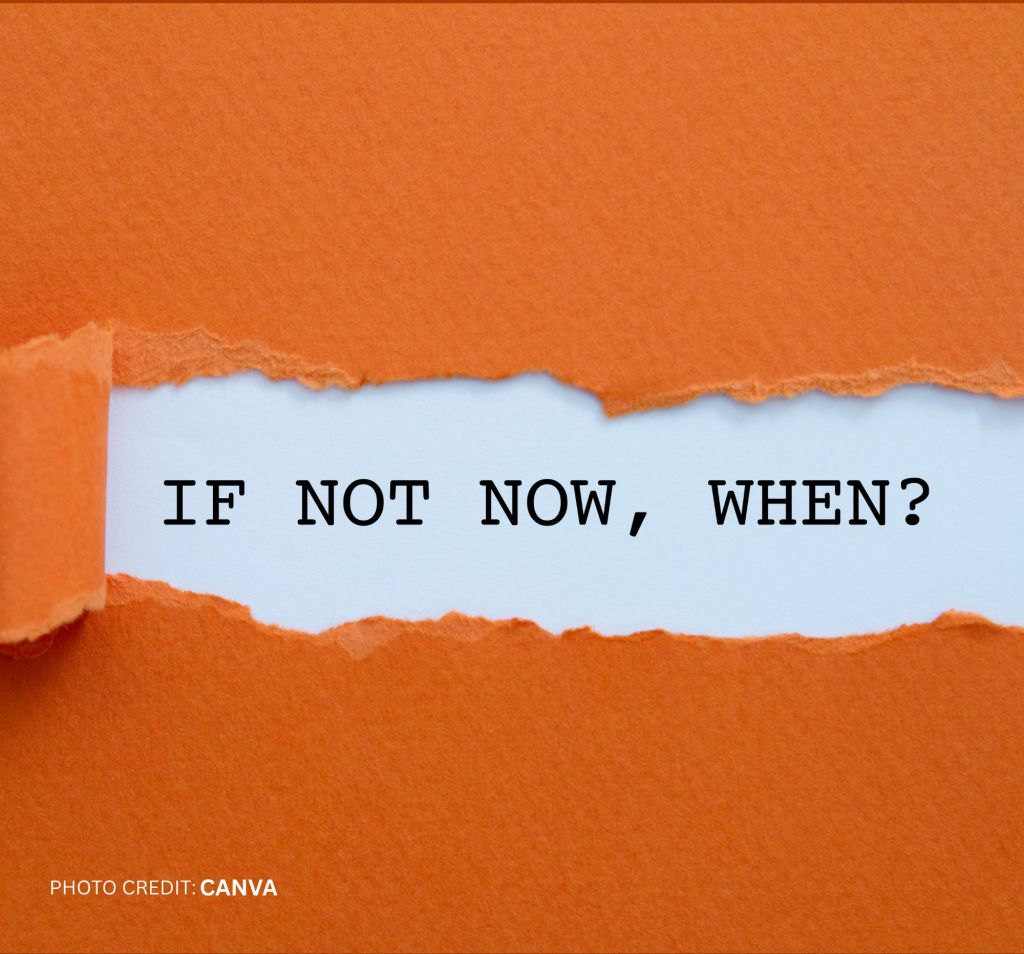
Feeling ready is a signal, not a prerequisite and waiting for it is a delay disguised as preparation.

Why the Myth Persists

People cling to readiness because it offers comfort. It tells us we can plan perfectly, know enough, and wait for motivation to appear. It promises that one day, conditions will align and we will naturally take action. That promise rarely materializes. 

Motivation is fleeting. 

Motivation is emotional.

Motivation cannot replace consistency, courage, or practice.

Readiness appeals to perfectionists. 

It appeals to procrastinators. 

It appeals to anyone afraid of failure. 

But the truth is simple: readiness comes from doing, not thinking. It comes from small, persistent steps, often in conditions we cannot control.

Why Motivation Is Overrated

Motivation feels good, but it is unreliable. You will not always feel inspired. Some days your energy will be low. Some mornings you will wake up exhausted or distracted. Waiting for motivation to push you forward is a strategy that fails more often than it succeeds.

Long-term results come from habits, routines, and decisions made regardless of feeling inspired. 

Motivation is a spark. 

Habits are the engine. 

Habits do not rely on feelings.

Habits create results even when enthusiasm fades.

The Practical Reality of Readiness

Readiness is an illusion because it implies a perfect alignment of circumstances, timing, and mental state. These conditions rarely exist. Success does not require feeling ready. It requires acting anyway. Every athlete, entrepreneur, artist, and leader has taken steps they were not ready for. They failed. They learned. They adjusted. They persisted. That is how results happen.

Waiting to feel ready results in delayed action. Delayed action results in missed opportunities. Every day spent waiting is a day lost to fear, overthinking, and indecision.

How to Act Without Feeling Ready

1. Start Small, Start Real

If you want to run, begin with a short route. If you want to write, begin with one paragraph. Small actions compound. They build competence and confidence.

2. Accept Discomfort as a Sign of Progress

Growth is uncomfortable. Waiting to feel comfortable is waiting for stagnation. Discomfort is proof that you are stepping beyond familiar limits.

3. Commit to Routines, Not Inspiration

The long-term engine is consistency. Show up. Repeat actions daily. Track progress. Avoid relying on emotional highs to carry effort.

4. Ignore the Perfect Moment

The perfect moment rarely exists. Resources are never perfect. Circumstances are never ideal. Action in imperfect conditions is the mark of real achievement.

5. Redefine Readiness as Preparation

Readiness should be understood not as waiting, but as preparation. Preparation is doing the work even when you do not feel like it. Preparation builds the skills, habits, and resilience that eventually make decisive moments manageable.

Athletes train when no one is watching. 

Entrepreneurs pitch ideas before they have experience. 

Writers finish books while the world doubts them. 

Leaders make difficult decisions without feeling fully equipped.

Musicians practice scales until their fingers are raw. 

All of them acted before feeling ready. All of them relied on systems, discipline, and repetition instead of waiting for motivation.

Why This Matters for Everyone

Believing in readiness creates procrastination disguised as planning. 

Believing in motivation creates inconsistency disguised as ambition. 

Action, however imperfect, generates feedback, learning, and momentum. 

Action builds confidence. 

Action produces results. 

Waiting for readiness or inspiration produces stagnation and regret.

If you are trying to launch a project, improve a skill, or change a habit, the only reliable path is doing, not waiting. 

Every day you act without feeling ready, you increase the likelihood of success. 

Every day you wait, you lose more than time; you lose confidence in your ability to lead yourself.

Final Thoughts

The athletes kneeling at the starting line did not wait to feel ready. They trained relentlessly, day after day, in conditions that were inconvenient, painful, and imperfect. When the gun fired, they were ready not because they felt ready, but because they had already done the work.

The same principle applies to your goals. Feeling ready is a luxury. Action is a necessity. Motivation will help you sometimes, but discipline and repetition will carry you further. Readiness is a myth. Action is reality. Start where you are, do what you can, and persistence will make you unstoppable.
This Thing Called Self‑Control: Learning to Design Better Yeses by Saying No

We all talk about self‑control like it is some rare skill that only the strong have. We think it means resisting impulses in the moment and holding back until we win. But self‑control is not a heroic act of willpower on demand. It is a  practice of design. It is the choices we make in advance that shape our ability to follow through later.

Systems Over Goals

In Atomic Habits, James Clear  writes that, “You do not rise to the level of your goals. You fall to the level of your systems.” The idea is simple: Goals are the destination. Systems are the path. Without systems, self‑control becomes something we hope for instead of something we build.

The Habit Loop

When we think of self‑control as a momentary battle, we set ourselves up to lose. We think if we just feel stronger today, we will resist that distraction, skip that snack, stay off our phones, or work for longer. But self‑control rarely thrives on feeling. It thrives on structure.

Charles Duhigg in The Power of Habit. He tells us that habits are loops made of a cue, a routine, and a reward. Duhigg explains that when we understand the cues that trigger our behaviors, we can change the routines they lead to. This means self‑control starts not with resisting impulses but with noticing what prompts them in the first place.

Energy, Willpower, and Design

Think about it for a moment.

We usually fail self‑control at night after a long day because our energy reserves are low.

We grab the easiest thing we can find. That is how our brain is wired to conserve effort. If we want to change that, we must change the environment where the choice happens.

We must put the hard decisions earlier in the day when we have more energy. We must remove easy temptations so the default choice becomes the better one.

Another point worth noting comes from Roy F. Baumeister’s research on willpower. Baumeister and John Tierney wrote about willpower in Willpower: Rediscovering the Greatest Human Strength. They show that willpower is not infinite. It gets depleted as the day goes on. This means treating self‑control as something we summon in the moment is not realistic.

Instead we need to design our lives so we are not constantly draining our limited supply. We cannot make every choice a battle. We must arrange our routines so many of those choices are already made in favor of what matters.

The Real Role of Self‑Control

Almost every self‑help book that takes self‑control seriously points to the same truth. The real change happens when we choose the right context. When we remove the easy yes that leads us astray, we make it easier to say yes to what we care about. This is how self‑control stops being a daily struggle and becomes a predictable outcome of good design.

Designing the Path, Not Waiting for Motivation

Stop thinking of self‑control as resisting a pull. Start thinking of it as shaping the path we walk on. That shift is subtle but powerful. When we know what environments and routines help us, we stop relying on inspiration. We stop hoping we will feel strong enough tomorrow. We build conditions that support our goals without requiring daily battles of will.

Here is what that looks like in real life.

If we want to write more, we do not depend on feeling motivated at 10 pm. We set a writing time earlier in the day. We keep our writing space ready. We remove distractions from that space. We do not wait for mood or excitement. We build the context where showing up becomes easier than putting it off.

If we want to eat better, we do not rely on resisting snacks on the spot. We remove tempting foods from the house. We prepare meals in advance. We make the healthy choice the default choice. That way, the moment of decision does not require strength. It simply unfolds naturally.

If we want to be more productive, we stop believing that motivation is the engine. We build routines. We track our progress. We celebrate consistency, not bursts of enthusiasm. We recognize that habits are the engines that make self‑control sustainable.

The Power of Saying No

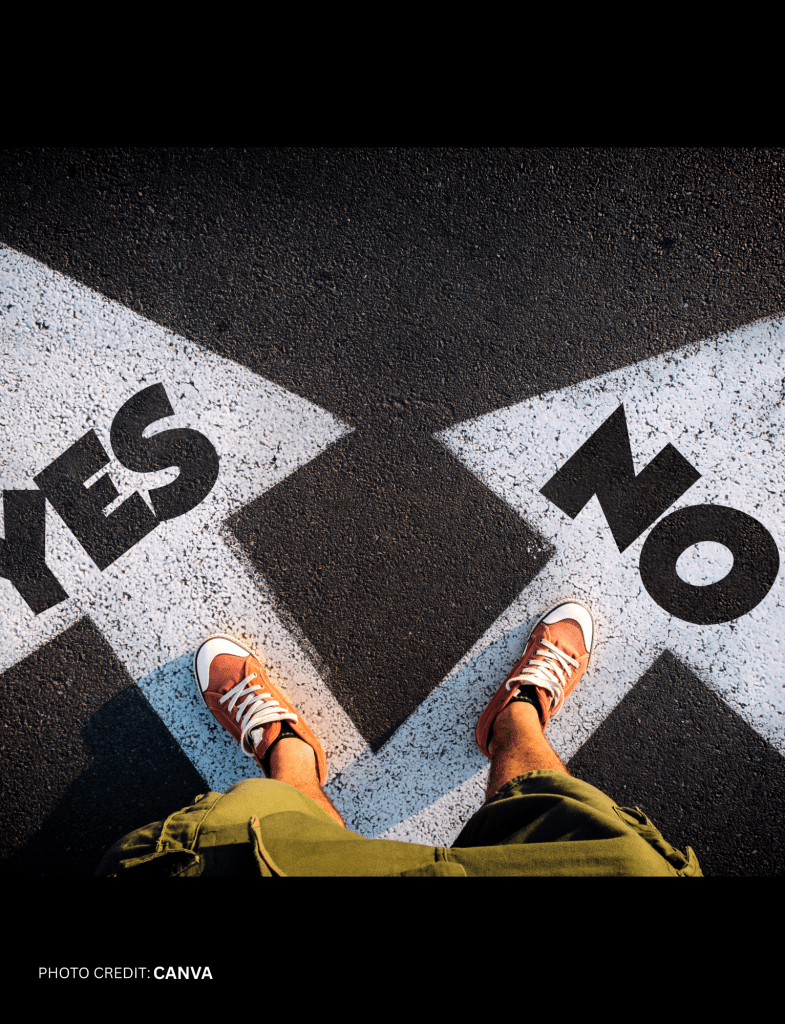
We also need to face an uncomfortable truth. Saying no is as important as saying yes. A yes to one thing is a no to something else. When we agree to every request, every distraction, every impulse, we dilute our focus. We scatter our energy. We end up exhausted by the end of the day with little to show for it.

We must learn to say no to the immediate pull so we can say yes to the long‑term gain. Saying no to a night of scrolling might mean saying yes to a stronger focus. Saying no to an unhealthy choice might mean saying yes to greater well‑being. Saying no to busyness might mean saying yes to meaningful work.

Self‑Control as Design, Not Struggle

This is a design problem. We are not perfect. We will slip. We will choose the easy yes sometimes. That is expected. The question is whether we build systems that catch us most of the time or whether we leave everything to chance.

The Long Game

When we design better yeses by saying no to the easy distractions, we take control of our days. We choose our habits rather than being chosen by them. We create conditions where self‑control is the default instead of a daily battle.

We do not have to be perfect. We do not have to be strong at every moment. We only need to build better contexts and better routines. When we do that, self‑control becomes less about resisting and more about living in a way that supports our goals.

Self‑control is not a rare gift. 

It is a set of practices. 

It is the result of choices made ahead of time. 

It is the design of our environment and routines. 

It is the better yes that appears when we have said no to the easy distractions.

Final Thought

If we stop thinking of self‑control as a struggle and start thinking of it as design, we change how we live. 

We move from hoping for strength to creating support. 

We build better habits. 

We make better choices. 

And over time, we realize that self‑control was never about resisting. It was about arranging our lives so the right choices become the natural ones.

10 Outlier Things Future Leaders Should Be Doing Now(For Those Who Know They’ll Lead One Day)

Source: Canva

Everybody talks about “preparing for leadership” as if leadership is a conference you register for two weeks before it starts.

But the truth is simpler and more uncomfortable:

If you will lead tomorrow, it will show in what you are secretly doing today.

Forget the predictable advice: “read more,” “take courses,” “network.”

Those are fine, but they’re mainstream. Leadership has become a buzzword, and buzzwords don’t build people.

Let’s talk about the outlier things, the unexpected disciplines that  build capacity for the kind of leadership that lasts.

1. Learn To Function Without Applause

If you still need compliments to feel competent, you’re not ready for leadership. Because the day you lead, the applause stops and the complaints begin. Train your soul now to work in silence. That’s where real power forms.

2. Practise Making Decisions With Incomplete Information

Most people wait until they “know enough.” Leaders rarely enjoy that luxury. Start making small but real decisions with 70% of the data. It trains your courage, your judgement, and your ability to live with consequences.

3. Build Friendships Across Social Levels Especially “Downwards”

Future leaders are not the ones chasing celebrities but the ones who understand the value of ordinary people: cleaners, technicians, admin, assistants, drivers, interns, etc. These people teach you humility, give you unfiltered intelligence, and later become the backbone of whatever you lead.

4. Learn The Art Of Being Misunderstood Without Becoming Bitter

Future leaders will be misread, misquoted, misjudged. If you take everything personally now, you’ll fall apart later. Train yourself to hold your truth gently without becoming defensive or vengeful.

5. Master Boring Consistency

Leadership is less about charisma and more about reliability. Set one small discipline: sleep, prayer, reading, budgeting, gym, and do it for six months. The goal of consistency is to keep pushing hard even when it’s not fun.

6. Start Treating Relationships As Long-term Investments, Not Quick Returns

A future leader doesn’t use people. They store people gratefully, respectfully, intentionally. Send a message to someone who once helped you.

Check on a former mentor.

Keep relational bridges intact.

Leadership collapses when it is built on transactional networking.

7. Practise Self-control In Small Things

How you handle:

  • your appetite
  • your temper
  • your screen
  • your spending
  • your impulses

is the rehearsal for how you will manage power. If you cannot discipline your cravings, power will simply amplify your chaos.

8. Serve Where Nobody Is Watching

Don’t wait for titles.

Wash dishes.

Stay back to stack chairs.

Offer help without publicity.

Leadership that doesn’t begin in service always ends in tyranny.

9. Study People More Than You Study Textbooks

Emotional intelligence is a crucial survival skill. Watch how people respond under stress. Notice what motivates different personalities. Observe how conflicts escalate or de-escalate. A leader who cannot read people will eventually be ruled by them.

10. Build An Inner Life Deeper Than Your Outer Ambition

Leadership without depth collapses at the slightest pressure.

Invest in silence, reflection, prayer, journaling, self-honesty.

Your mind and spirit must grow faster than your opportunities, or those opportunities will choke you.

Final Thought

If you sense leadership in your future, don’t wait for titles, elections, or invitations. Leadership is not something you step into but something you grow into. Do these 10 outlier things now, and when the time comes, leadership will not feel like a promotion. It will feel like a natural continuation of who you have already become.

How to Build an Inner Life in a Noisy World (For People Who Are Tired Of Living From The Outside In)

Source: Canva

We live in a world that demands noise from us.

Noise in the form of visibility, updates, opinions, busyness, speed, constant engagement, and an endless performance of “I’m doing fine.”

But somewhere between the noise and the expectations, many people have lost the most important space in their lives: the inside.

You can be talented, visible, or even celebrated, yet hollow inside.

You can be busy, productive, and hyper-connected, yet strangely disconnected from yourself.

The world trains us to build the outer life: the CV, the wardrobe, the profile, the visibility, the applause.

But nobody teaches us how to build the inner life, the quiet centre that gives everything else meaning, stability, and direction.

Aristotle would call it the contemplative life.

I simply call it the life that no one can take away from you.

If you’re tired of the constant pull and want something different, here’s how to build it in a noisy, distracted, hyper-stimulated world.

1. Start By Creating A “Quiet Corner” In Your Day

The human soul suffocates without silence. Not necessarily an hour, even ten intentional minutes can change your mental weather.

Sit. Breathe.

No phone.

No music.

No scrolling.

Just you, your thoughts, your God, your inner world.

At first it feels awkward.

Then it becomes peaceful.

Eventually, it becomes necessary.

2. Replace Reaction With Reflection

Most people live in reaction mode:

  • reacting to notifications
  • reacting to news
  • reacting to people’s comments
  • reacting to expectations

Reflection is when you pause long enough to ask:

“What do I really think about this?”

“Why did that hurt me?”

“What is my motive here?”

“Does this align with who I’m trying to become?”

Reflection creates clarity.

Clarity creates peace.

And peace is the fuel of inner strength.

3. Build A Private Relationship With Yourself

Many people know about themselves: their age, their skills, their personality type, but they have no relationship with themselves.

Ask yourself:

  • What do I value deeply?
  • What drains me?
  • What renews me?
  • What do I fear but never admit?
  • What do I want that scares me?
  • What does peace feel like in my body?

The inner life begins with honesty. And honesty begins with self-conversation.

4. Feed Your Mind Something Other Than Noise

Not everything you consume should be fast, loud, or shallow.

Feed your mind with:

  • books that stretch you
  • Scripture or spiritual texts
  • thoughtful podcasts
  • music that calms rather than stimulates
  • silence (yes, silence is food)

You cannot have a deep inner life on a diet of noise and distraction.

5. Develop Rituals, Not Just Habits

Habits are actions.

Rituals are meaningful actions.

Your morning routine can be a habit. But lighting a candle, saying a short prayer, journaling, or stepping outside to watch the sky? That’s a ritual.

Rituals anchor you. 

They slow the pace of a world that moves too fast.

They remind you that life is bigger than emails and deadlines.

6. Protect Your Emotional Boundaries

A noisy world wants access to you, to your attention, your time, your peace, and your energy.

Building an inner life means learning to say:

  • “I’m not available for that right now.”
  • “I won’t engage in that argument.”
  • “I don’t need to respond instantly.”
  • “My peace comes first.”

Boundaries are not walls.

They are filters.

They let in what nourishes you and keep out what destabilises you.

7. Nurture A Spiritual Life In Whatever Way Is Meaningful To You

Whether through prayer, meditation, Mass, Scripture, or  gratitude, a spiritual anchor creates depth.

Without a spiritual life, your inner world becomes a garden without water. A kind of good soil but no nourishment.

With a spiritual life, you develop resilience that is not dependent on circumstances.

8. Build A Small Circle That Speaks Truth Into Your Life

A rich inner life does not mean isolation. It means being intentional about the voices you allow near your heart.

Find people who:

  • challenge you without shaming you
  • correct you without crushing you
  • inspire growth without competition
  • love you without agenda

Inner strength grows best in the presence of healthy relationships.

9. Do Something Slowly And On Purpose

We are losing the ability to slow down.

Do one thing slowly every day:

  • wash dishes slowly
  • walk slowly
  • eat without a screen
  • read a physical book
  • breathe intentionally
  • sit outside and look at nothing

Slowness restores the parts of you that speed has been eroding.

10. Let Your Identity Flow From The Inside Out

This is the core of everything.

When your identity is rooted in:

  • titles
  • roles
  • likes
  • income
  • appearance and
  • achievements,

your peace becomes fragile.

When it is rooted in:

  • self-awareness
  • spiritual groundedness
  • inner clarity
  • values
  • purpose and
  • character,

your life becomes unshakeable.

Your outer world may change.

Your seasons may shift.

People’s opinions may rise and fall.

But your inner life, the space where your real self lives, will remain steady.

Final Thought

The world is noisy.

But you don’t have to be.

You can build a life so grounded, so centred, so inwardly rich that no external chaos can destabilise you. A life no one can give you and no one can take away.

And that, truly, is the beginning of freedom.

The Life That Can Be Taken Away: Rethinking Honour, Validation, and the Pursuit of a Meaningful Life

Source: Canva

Many years ago, when I first met Aristotle in a philosophy class, I didn’t fully appreciate how practical he was. But as life unfolds, his ancient wisdom begins to sound strangely modern, almost as if he had lived among us, scrolling through Instagram, attending performance reviews, and watching political drama unfold in real time.

Aristotle argued that human beings generally spend their lives pursuing one of three kinds of life: 

  • the life of pleasure
  • the life of honour
  • and the contemplative life. 

You might hear this and think, “Philosophy talk,” but if you look closely, you’ll recognise yourself somewhere in that list.

Today, let’s focus on the life of honour because this is the one most people unknowingly chase, and it’s also the one with the biggest built-in danger.

The Life That Depends on Other People

Aristotle said the life of honour is attractive because it feels noble. It is the life of achievement, recognition, influence, and status; what today we might call:

  • career success
  • awards and public praise
  • political visibility
  • professional reputation
  • social media validation

Nothing is wrong with these things. In fact, they are important. Society cannot function without people who lead, excel, and contribute.

But Aristotle pointed out one uncomfortable truth:

Honour is given by others. And whatever is given by others can be taken away by them.

That single insight explains much of the anxiety and performance pressure people live under today.

  • In the workplace, one manager’s opinion can make or break your appraisal.
  • Online, one viral moment can build your platform and one rumour can destroy it.
  • In politics, popularity is a wind that shifts without warning.
  • Even in families, approval can be inconsistent.

A life built on external validation will always feel unstable, because you’re essentially renting your happiness from other people.

And rent can go up.

Or expire.

Or be revoked without notice.

Why This Matters to Ordinary People Like Us

You don’t need to be a politician or a celebrity for this to apply. Think of the everyday situations:

1.Career

You pour yourself into your job, but a change in leadership suddenly reduces your visibility. Or a brilliant project goes unnoticed because someone else takes the credit.

2. Social Media

You start posting your work, expecting encouragement, but the likes don’t come. Or worse, they come and then suddenly they don’t. Your mood rises and falls with metrics you don’t control and your happiness is measured by an algorithm.

3. Family and Society

Some people live as though life is a never-ending audition for respect. They sacrifice peace trying to meet expectations that keep shifting.

In all these cases, you are essentially trusting other people to define your worth.

And people, wonderful as they may be, are unpredictable.

The Alternative: Building a Life That Cannot Be Taken Away

Aristotle believed the highest life is the contemplative life not in the sense of meditating on a mountain, but in the sense of living from the inside out rather than from the outside in.

In practical terms, this means:

Cultivating Inner Competence

Take pride in doing your work well, not because someone will clap, but because you value excellence.

Deepening Your Inner Life

This can mean prayer, reflection, journaling, reading, or simply creating space to think. People with a rich inner world are harder to destabilise.

Knowing Who You Are When No One Is Watching

If applause stopped today, would you still feel grounded? If a role, title, or platform disappeared, would your identity survive? Take time to answer these questions. You’ll be surprised by what you find out about yourself through the answers.

Your Worth Cannot Be Outsourced

The deeper point Aristotle makes is this:

A meaningful life must be rooted in something that cannot be revoked.

When your sense of worth is tied to external validation, your peace becomes fragile.

When it is grounded in personal values, inner clarity, spiritual depth, and sincere self-respect, your life becomes harder to shake.

Titles may change.

Followers may fluctuate.

People’s opinions may drift.

But what is built inside you remains yours.

And that, is the kind of life no one can take away.