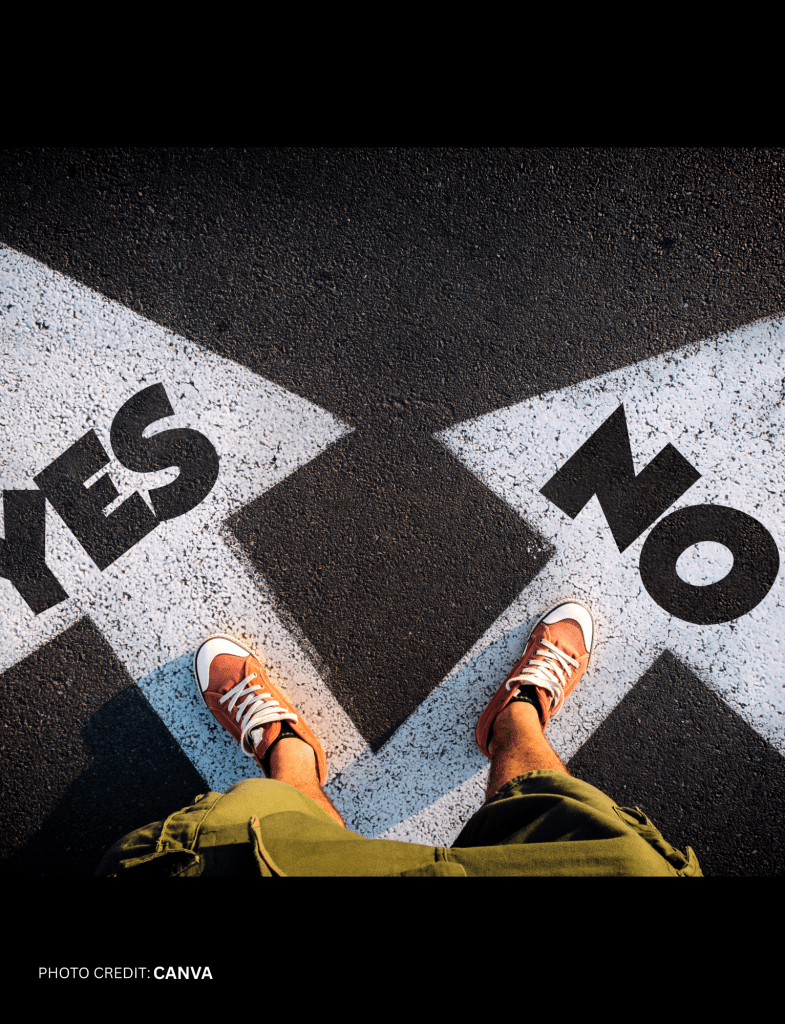
We all talk about self‑control like it is some rare skill that only the strong have. We think it means resisting impulses in the moment and holding back until we win. But self‑control is not a heroic act of willpower on demand. It is a practice of design. It is the choices we make in advance that shape our ability to follow through later.
Systems Over Goals
In Atomic Habits, James Clear writes that, “You do not rise to the level of your goals. You fall to the level of your systems.” The idea is simple: Goals are the destination. Systems are the path. Without systems, self‑control becomes something we hope for instead of something we build.
The Habit Loop
When we think of self‑control as a momentary battle, we set ourselves up to lose. We think if we just feel stronger today, we will resist that distraction, skip that snack, stay off our phones, or work for longer. But self‑control rarely thrives on feeling. It thrives on structure.
Charles Duhigg in The Power of Habit. He tells us that habits are loops made of a cue, a routine, and a reward. Duhigg explains that when we understand the cues that trigger our behaviors, we can change the routines they lead to. This means self‑control starts not with resisting impulses but with noticing what prompts them in the first place.
Energy, Willpower, and Design
Think about it for a moment.
We usually fail self‑control at night after a long day because our energy reserves are low.
We grab the easiest thing we can find. That is how our brain is wired to conserve effort. If we want to change that, we must change the environment where the choice happens.
We must put the hard decisions earlier in the day when we have more energy. We must remove easy temptations so the default choice becomes the better one.
Another point worth noting comes from Roy F. Baumeister’s research on willpower. Baumeister and John Tierney wrote about willpower in Willpower: Rediscovering the Greatest Human Strength. They show that willpower is not infinite. It gets depleted as the day goes on. This means treating self‑control as something we summon in the moment is not realistic.
Instead we need to design our lives so we are not constantly draining our limited supply. We cannot make every choice a battle. We must arrange our routines so many of those choices are already made in favor of what matters.
The Real Role of Self‑Control
Almost every self‑help book that takes self‑control seriously points to the same truth. The real change happens when we choose the right context. When we remove the easy yes that leads us astray, we make it easier to say yes to what we care about. This is how self‑control stops being a daily struggle and becomes a predictable outcome of good design.
Designing the Path, Not Waiting for Motivation
Stop thinking of self‑control as resisting a pull. Start thinking of it as shaping the path we walk on. That shift is subtle but powerful. When we know what environments and routines help us, we stop relying on inspiration. We stop hoping we will feel strong enough tomorrow. We build conditions that support our goals without requiring daily battles of will.
Here is what that looks like in real life.
If we want to write more, we do not depend on feeling motivated at 10 pm. We set a writing time earlier in the day. We keep our writing space ready. We remove distractions from that space. We do not wait for mood or excitement. We build the context where showing up becomes easier than putting it off.
If we want to eat better, we do not rely on resisting snacks on the spot. We remove tempting foods from the house. We prepare meals in advance. We make the healthy choice the default choice. That way, the moment of decision does not require strength. It simply unfolds naturally.
If we want to be more productive, we stop believing that motivation is the engine. We build routines. We track our progress. We celebrate consistency, not bursts of enthusiasm. We recognize that habits are the engines that make self‑control sustainable.
The Power of Saying No
We also need to face an uncomfortable truth. Saying no is as important as saying yes. A yes to one thing is a no to something else. When we agree to every request, every distraction, every impulse, we dilute our focus. We scatter our energy. We end up exhausted by the end of the day with little to show for it.
We must learn to say no to the immediate pull so we can say yes to the long‑term gain. Saying no to a night of scrolling might mean saying yes to a stronger focus. Saying no to an unhealthy choice might mean saying yes to greater well‑being. Saying no to busyness might mean saying yes to meaningful work.
Self‑Control as Design, Not Struggle
This is a design problem. We are not perfect. We will slip. We will choose the easy yes sometimes. That is expected. The question is whether we build systems that catch us most of the time or whether we leave everything to chance.
The Long Game
When we design better yeses by saying no to the easy distractions, we take control of our days. We choose our habits rather than being chosen by them. We create conditions where self‑control is the default instead of a daily battle.
We do not have to be perfect. We do not have to be strong at every moment. We only need to build better contexts and better routines. When we do that, self‑control becomes less about resisting and more about living in a way that supports our goals.
Self‑control is not a rare gift.
It is a set of practices.
It is the result of choices made ahead of time.
It is the design of our environment and routines.
It is the better yes that appears when we have said no to the easy distractions.
Final Thought
If we stop thinking of self‑control as a struggle and start thinking of it as design, we change how we live.
We move from hoping for strength to creating support.
We build better habits.
We make better choices.
And over time, we realize that self‑control was never about resisting. It was about arranging our lives so the right choices become the natural ones.
 Cornelius Ndubuisi