The Power of Playing the Long Game Like Jensen Huang

In a world obsessed with overnight success, Jensen Huang is a quiet rebellion. While most CEOs chase quarterly wins, the NVIDIA founder built an empire by betting on a future no one else could see and waiting long enough for it to arrive.

His story is not one of fast fame or lucky breaks but a masterclass in patience, conviction, and the power of playing the long game.

When Huang co-founded NVIDIA in 1993, the world didn’t care much about graphics processors. Computers were still crawling toward speed and color; the idea of using GPUs for more than gaming sounded absurd.

Yet Huang saw something everyone else missed, that the same chips that made video games beautiful could also make artificial intelligence possible. It took decades for the rest of the world to catch up. And in that journey lie a few powers worth paying attention to.

That’s the first lesson: playing the long game begins with seeing beyond the moment. Huang didn’t build for the present but for the inevitable. When others optimized for short-term profit, he invested in research that wouldn’t pay off for twenty years. It’s a mindset that separates those who make noise from those who make history. But foresight alone isn’t enough. Long games are grueling. They require the kind of stamina that survives failure after failure without losing faith. NVIDIA nearly went bankrupt multiple times. Its early chips were expensive, hard to market, and misunderstood. Yet Huang refused to fold. He kept showing up, refining, rebuilding, reinvesting. His leadership wasn’t defined by perfection, but by endurance.

That’s the second lesson: patience is not passive. It’s active resilience. Huang once said that “our company is 30 years in the making, and every day felt like day one.” The long game isn’t about waiting idly for your time to come. It’s about working with urgency today for results that may not come for years. It’s the discipline to believe in something long enough for it to mature. By 2006, NVIDIA released CUDA, a software platform that let developers use GPUs for computing beyond graphics, a radical idea at the time. It wasn’t immediately celebrated. In fact, many dismissed it. But that innovation became the foundation of today’s AI revolution. Two decades later, the chips NVIDIA built for gamers now power the world’s largest data centers, AI models, and autonomous systems.

The third lesson? The long game rewards those who prepare for the future before it’s fashionable. Visionaries like Huang don’t chase trends; they create them. He once said, “We’re always running toward where the ball is going, not where it is.” That’s how long-term thinkers operate; they invest in the invisible. And here’s the irony: while everyone else burns out chasing speed, the slow and steady ultimately become unstoppable.

NVIDIA’s valuation soared past a trillion dollars, not because Huang sprinted, but because he persisted. He built a foundation strong enough to outlast hype cycles.

There’s something deeply human about that kind of endurance. We live in a culture of instant validation where people want virality more than vision, applause more than progress.

Jensen Huang’s story reminds us that great things take time, and that time itself can be your biggest competitive advantage if you use it wisely.In the end, playing the long game is about willing the future into existence. It’s about holding your vision steady while the world wavers.

Huang proved that when you align relentless work with relentless patience, the world eventually catches up to you.

So whether you’re building a business, a career, or a dream, remember Jensen Huang: the man who built the future by refusing to rush it. Because in a world chasing shortcuts, the real power lies in endurance and in the courage to keep playing long after everyone else stops.
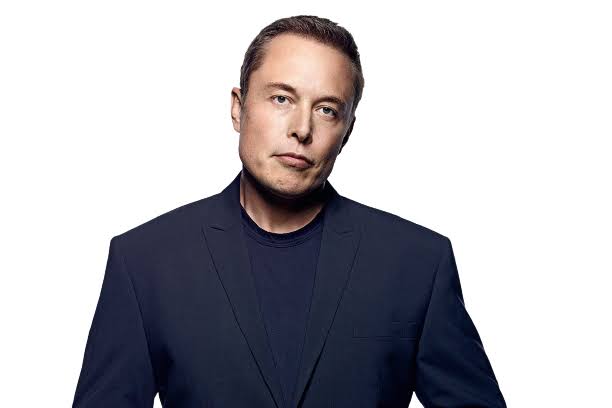
5 Weird Lessons to Learn from Elon Musk

An image of Elon Musk

Love him or hate him, Elon Musk is one of the strangest teachers alive. His life looks like chaos wrapped in genius which is somehow also a daily reminder that brilliance and madness sometimes share the same office.

He is controversial. Yes.

His decisions are not always met with rousing applause, true.

Yet beneath his controversies are a few lessons most of us could use, even if we never plan to buy a rocket, or rename Twitter.

Here are five weird but worthwhile lessons to learn from him.

1. What’s the use of “f***-you money” if you can’t say “f*** you”?

The phrase “f***-you money” has floated around Wall Street for decades and it means the kind of wealth that frees you from having to please anyone. And Musk might be the first billionaire who actually lives by it. When advertisers pulled out of X (formerly Twitter) over his views, Musk in his usual manner snapped:

“If somebody’s going to try to blackmail me with advertising? Blackmail me with money? Go f*** yourself.”

Elon Musk, New York Times DealBook Summit 2023

He’s backed politicians like Donald Trump, then publicly clashed with them when he disagreed not because it’s strategic, but because he can.

The lesson: Leverage isn’t power until you use it. Whether it’s money, influence, skill, or freedom of time, the point of independence isn’t just to say you have it; it’s to live by it.

2. Stop staring at the scoreboard

Forbes keeps trying to rank the richest people on earth. Musk keeps pretending not to care. His net worth rises and falls by billions, yet he rarely comments on the list. When Tesla’s shares crashed, he told employees to hold tight and not panic because he was confident the value would climb again.

The lesson: Obsessing over metrics makes you a spectator of your own life. Success that depends on constant external validation: likes, rankings, and approval will always feel fragile. Do the work, believe in your trajectory, and let the scoreboard update itself.

3. Take universal problems personally

This might be Musk’s strangest strength. He comments on and adopts humanity’s challenges.

He worries that civilisation will collapse from low birth rates, so he’s fathered more children than most small towns.

He fears extinction on one planet, so he builds rockets to colonise another.

He’s even launched projects like xAI and Grokipedia to preserve and democratise human knowledge, hoping to someday store it beyond Earth.

The lesson: When you make a global problem personal, your motivation becomes unstoppable. Most people wait for institutions to fix things. Musk’s weirdness lies in asking, “Why not me?”

4. Use absurdity as a strategy

Space travel. Neural implants. Underground city tunnels. Colonising Mars. Electric trucks shaped like geometry homework. Half the time Musk sounds like a 12-year-old pitching sci-fi ideas until he actually builds them.

The lesson: Absurdity has power. Thinking beyond what’s “reasonable” is how boundaries move. Most innovation begins with a question that sounds ridiculous. If your dream doesn’t make someone laugh, it’s probably too small.

5. Fail loudly and keep building

Musk has missed deadlines, launched exploding rockets, and made promises that Twitter/X never fulfilled. But instead of hiding, he doubles down, learns in public, and builds again.

The lesson: Failure isn’t fatal, silence is. The people who grow fastest aren’t those who avoid mistakes but those who recover visibly. Progress requires public imperfection.

Final thought

You don’t have to agree with Elon Musk, most people don’t. But you can’t deny that he plays the game of life at full volume. His weirdness teaches a simple truth: freedom, focus, purpose, imagination, and resilience are messy in practice but priceless in effect.

So maybe the next time someone calls your dream “crazy,” take it as a compliment. You might just be on the Musk frequency.