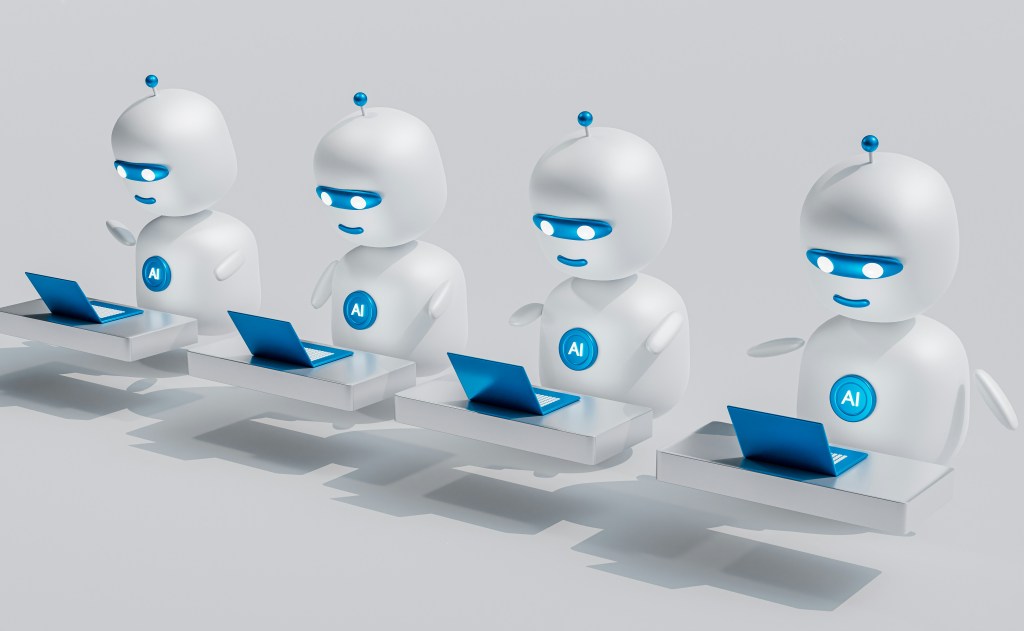
Across the ocean, in Silicon Valley, a new model of an AI-driven programmer has been released. It can write, debug, and deploy code in less time than it takes a human to sip morning coffee. Meanwhile, a copywriter elsewhere just lost her job to a text generator, one that never gets tired, never calls in sick, never negotiates a raise.
Now, this is a big deal. Because for the first time, humanity is not only being replaced at the level of muscle, but at the level of mind.
Automation has been around since the first assembly line, but what we are witnessing now is cognitive displacement. Machines no longer just “do”; they “decide,” and that’s where the unease lies.
But here’s the question: who are we when machines do it better? What happens to the pride of craftsmanship, to the dignity of effort, to the very identity we’ve built around our usefulness? A generation ago, your worth was tied to your output. You could point to the thing you built, the words you wrote, the code you shipped. But what happens when someone, or something, can do it all faster, neater, cheaper?
The same technology taking jobs is also creating new ones, though fewer, and often more complex. The challenge is not that automation is ruthless but that it is efficient in a way that exposes how fragile our sense of self has become when detached from labour. The human identity has always leaned on work as its spine. Strip that away, and what remains?
Some argue that automation liberates us, that it frees humanity from drudgery so we can finally “be.” Others see it as the slow erasure of purpose, an unmaking of meaning through convenience. Both may be right.
Maybe this moment isn’t about losing identity but redefining it. Perhaps our worth shouldn’t hinge on productivity, but on perspective, our ability to imagine, empathize, and give meaning to the things machines only execute.Still, the irony is that even as we discuss automation, we do so using tools that are automating the very act of discussion.
The line is blurring. A robot writes poetry. A human edits it. Or maybe the other way around. Does it matter who did it better, or who did it first?Maybe the real question isn’t whether machines can do it better, but whether we can remain human enough to care. Because in the end, the soul of work has never been about output but about belonging. And that, for now at least, remains something no algorithm can replicate.
 Cornelius Ndubuisi